 Engenharia· · 2 min
AI Agents Are Evolving.
Today's tech landscape is buzzing with pivotal updates in AI, coding agents, and deployment strategies. From Kubernetes optimizations to new frameworks, the industry is pushing boundaries. If you're in software or web development, these insights could reshape your approach.
AI Agents Are Evolving
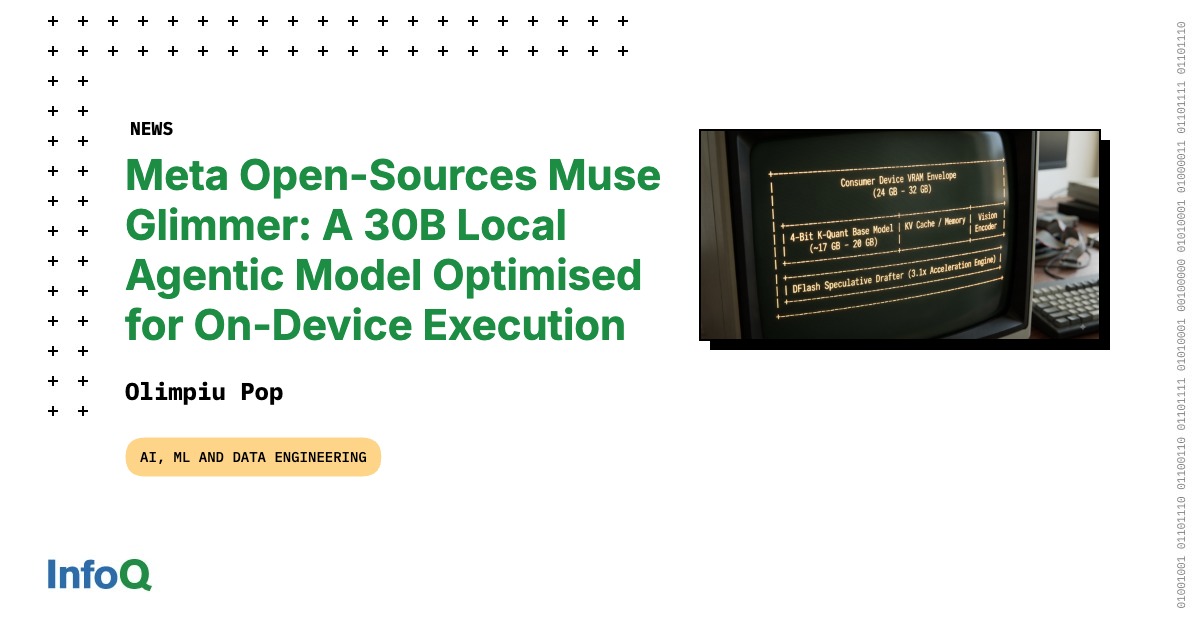
Meta just dropped Muse Glimmer, a 30B parameter model for local execution. Think of it as an AI agent that runs independently on consumer hardware—no cloud reliance needed. This is a big deal for developers wanting autonomy in their workflows.
Meanwhile, the trend of using AI to manage tasks is gaining traction. One developer built an AI agent to handle marketing tasks, transforming productivity and project management. These innovations showcase the potential of AI to not just assist but lead.
Deployment Strategies Under Scrutiny
Kubernetes users, listen up! A new analysis argues that CPU limits might be slowing your apps down unnecessarily. The takeaway? Focus on requests, not limits, to enhance performance and cut costs.
On another front, npm 12 is here, adjusting defaults for install scripts to enhance security. Developers will now have to explicitly allow scripts, a move toward greater trust and safety in package management.
Innovative Tools Are Here
The coding scene is buzzing with tools like DeepSeek-V4-Pro, which offers major upgrades for AI workflows. New pricing structures make it easier to scale your usage based on peak times—finally, flexible options are here!
Also, if you're looking to refine your coding agent models, check out the no-cost harness for comparing free coding-agent models. It’s a straightforward way to assess performance without breaking the bank.
Stablecoin Payments Are Becoming a Developer Problem
Stablecoin payments are shifting from crypto trading to mainstream applications. Developers now face challenges around which stablecoin to use and how to handle transactions efficiently.
Kubeflow Expands AI Capabilities as CNCF Graduation Nears
Kubeflow is enhancing its AI capabilities with new features as it approaches graduation from the CNCF. Key updates include a modernized SDK and improved production workflows.
- Why does Opus 5 feel worse to work with?Feedback suggests Opus 5 is less user-friendly than earlier versions despite its enhanced capabilities. — Mun Logadan
- How to Modernize a Legacy Application with AI Without Turning It Into a RewriteExplore strategies to modernize legacy applications using AI without a full rewrite. — FreeCodeCamp
- Rx.NET 7.0 Reduces Deployment Size by Splitting Windows UI SupportThe latest Rx.NET version reduces deployment size by separating UI support from the main package. — InfoQ
- Presentation: The Right 300 Tokens Beat 100k Noisy OnesInsights on effective context engineering for coding agents to improve performance. — InfoQ
- I Built an AI Agent to Boss Me Around — and It Made Me Launch an Open Source ProjectA developer shares their experience of creating an AI boss and its impact on productivity. — Dev.to
- Lumabri – Run Moe Models on a P2P Swarm with ColibriThis tool allows running large models collaboratively across a peer-to-peer network. — GitHub
- How to Build Production-Grade Agents with Pydantic AIA guide on leveraging Pydantic AI for building robust production agents. — FreeCodeCamp
Esta edição foi útil?
Um clique basta — isso orienta a próxima.