 Engenharia· · 3 min
Harnessing the Power of AI and Efficient Design.
Today in the software engineering and web development realm, a recurring theme emerges: the quest for efficiency, whether through building innovative tools or optimizing existing processes. From a fascinating exploration of decision trees in AI to a developer's journey simplifying complex architectures, the day's articles reflect a vibrant landscape of creativity and practical problem-solving. As the tech community grapples with the burgeoning influence of AI, the need for efficient tools and transparent methodologies has never been more crucial. Let's dive into the latest insights and innovations shaping our digital world.
Harnessing the Power of AI and Efficient Design
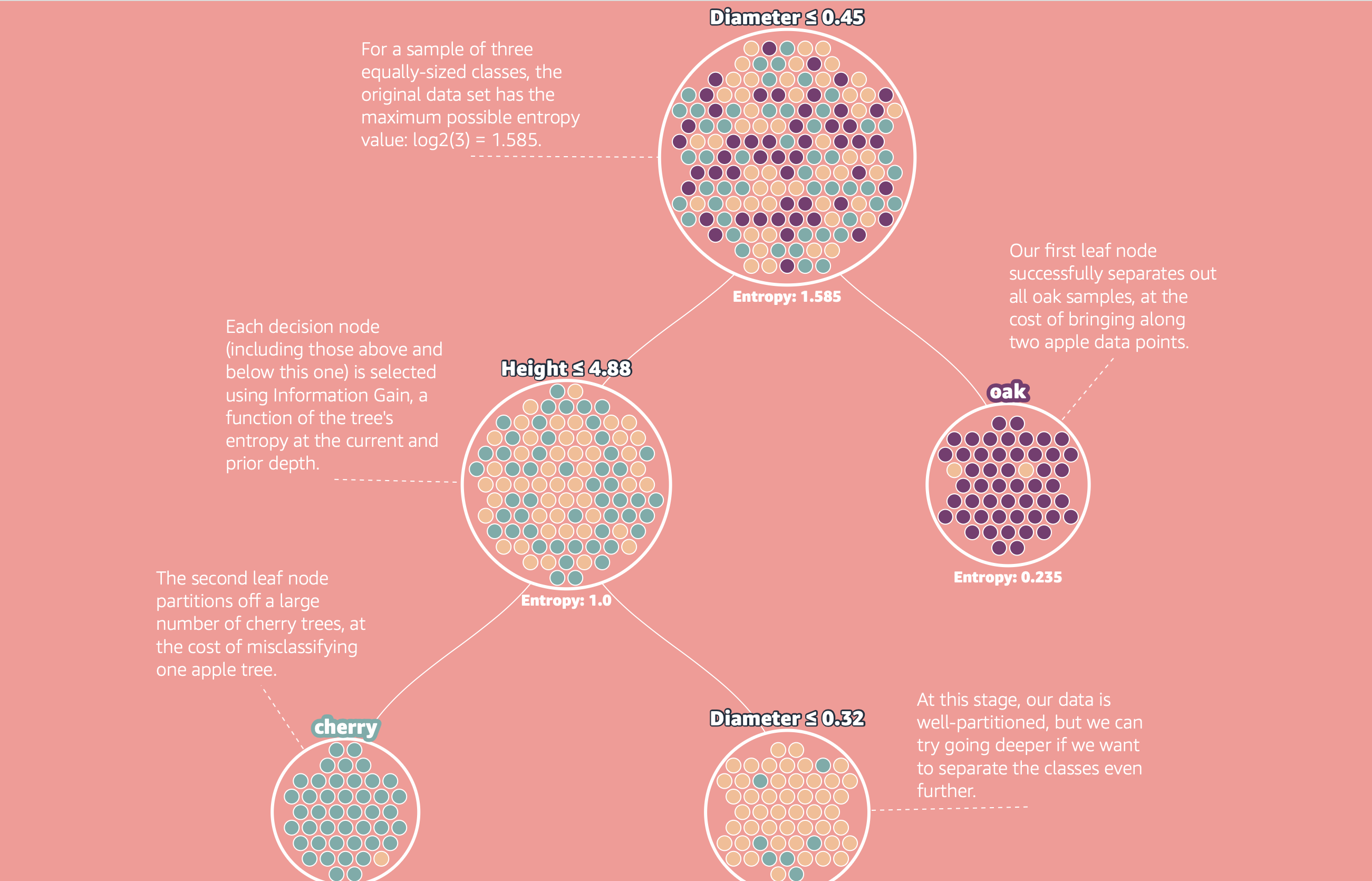
A recent post on decision trees reveals their surprising effectiveness in machine learning applications. The authors, Jared Wilber and Lucía Santamaría, illustrate the straightforward yet powerful concept of using nested decision rules to classify data, like determining tree species based on trunk dimensions. This exploration underscores how foundational concepts in AI remain relevant in today's complex ecosystems, where clarity and efficiency can significantly enhance performance.
On the educational front, Carnegie Mellon University is offering a free version of their 'Introduction to Modern AI' course, focusing on the machine learning methods that drive today's AI applications. The course promises to demystify the workings behind systems like ChatGPT and Gemini. This accessibility may empower a new wave of developers to engage with AI, encouraging a broader understanding of how these technologies can be leveraged for innovation.
Innovations in Developer Tools

In a world where bloated tools often plague productivity, developers are seeking simplicity and efficiency. BearLog, a new changelog tool, aims to strip down unnecessary features, focusing purely on delivering updates in a clean format that users can easily access. Its free tier offers unlimited changelog posts, making it an attractive option for solo developers and small teams looking to maintain user engagement without the clutter.
Meanwhile, the introduction of SilentCut, a browser-based tool that removes silence from audio files instantly, showcases how developers can leverage WebAssembly to create efficient, privacy-focused applications. By processing audio locally, SilentCut eliminates the risks associated with uploading files to servers, making it a game-changer for podcasters and content creators seeking to streamline their editing processes.
Rethinking AI Architectures

The tech community is also re-evaluating complex architectures that have become the norm. One developer's decision to scrap an entire AI microservice in favor of a simpler Postgres solution highlights a growing trend: the realization that sometimes, less truly is more. By consolidating data storage and embedding AI capabilities directly within a relational database, the developer not only simplified their architecture but also eliminated issues related to data synchronization, emphasizing a return to fundamentals in software design.
Furthermore, discussions around the need for 'emission tests' for AI applications draw attention to the environmental implications of token consumption in language models. As developers become more aware of the ecological footprint of their tools, there’s a clear push towards creating more efficient systems that minimize waste and maximize effectiveness.
A newly created account made over $515,000 betting on geopolitical events, showcasing the potential for financial speculation in uncertain times.
FonteThe Science of Detecting LLM-Generated Text
This insightful exploration dives deep into the methodologies for detecting text generated by large language models (LLMs). As AI-generated content becomes increasingly prevalent, understanding how to distinguish between human and machine writing is vital for maintaining content integrity and trust. The implications of this research extend beyond academic curiosity, impacting industries from journalism to education as they grapple with the authenticity of their materials.
Building a Real-Time Multimodal AI Communication Coach
This article outlines the development of Visions, an innovative AI communication coach that leverages multimodal inputs to provide real-time feedback on communication skills. By integrating video analysis and speech recognition, the coach offers tailored advice on posture, tone, and pacing, revolutionizing how we approach personal development in communication. This project exemplifies the intersection of AI and human interaction, highlighting the potential for technology to foster more effective interpersonal skills.
- Why is the first C++ (m)allocation always 72 KB?An intriguing look into why C++ allocates a standard memory block of 72 KB for initial allocations, linked to exception handling mechanisms. — Joel Siks
- JavaScript Promises Explained: A Startup Analogy for BeginnersA beginner-friendly breakdown of JavaScript promises, using a relatable startup analogy to explain their significance in asynchronous programming. — DEV Community
- An ode to houseplant programmingExploring the concept of 'houseplant programming,' where developers create bespoke solutions for their specific needs rather than mass-market applications. — Hannah Ilea
- Ghostty – Terminal EmulatorIntroducing Ghostty, a fast, feature-rich terminal emulator designed for cross-platform use with customizable features. — Ghostty
- DevDNA — Turn Your GitHub Activity Into a Developer PersonalityA tool that transforms GitHub activity into a dynamic Developer Personality Card, offering a visual representation of a developer's traits. — DEV Community
Esta edição foi útil?
Um clique basta — isso orienta a próxima.