 IA· · 3 min
The Rise of Multimodal Intelligence.
Today in the ever-evolving world of artificial intelligence, we see a fascinating interplay between groundbreaking model architectures, innovative tools, and the ethical implications of coding agents. With major releases like OpenAI's GPT-5.4 and Anthropic's Sonnet 4.6, the competition in the AI landscape is heating up, pushing boundaries on efficiency and capability. Meanwhile, discussions around the societal impact of AI, including its effects on human employment and the ethical considerations of AI-generated code, are becoming increasingly urgent as we navigate this complex terrain together.
The Rise of Multimodal Intelligence
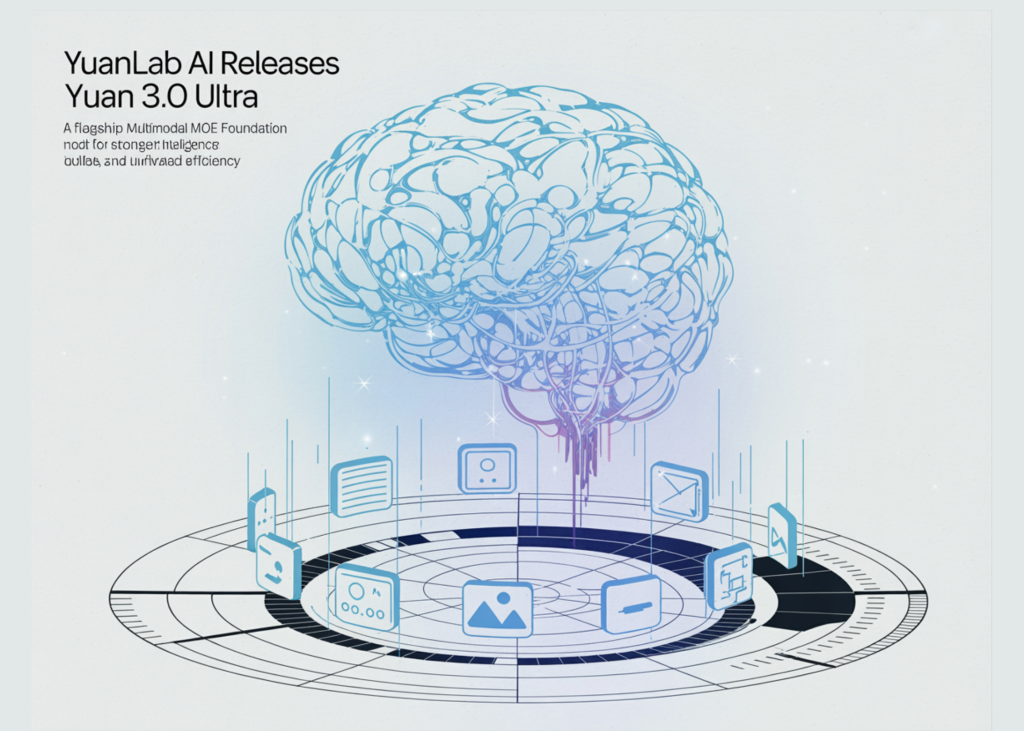
This week’s headlines herald a new era in AI with the arrival of Yuan 3.0 Ultra, a multimodal Mixture-of-Experts (MoE) model that boasts a staggering 1 trillion parameters. By activating only 68.8 billion parameters at a time, it promises efficiency gains without sacrificing performance. This model, along with OpenAI's latest GPT-5.4, which supports a 1 million-token context, marks a clear trend: the focus is shifting towards creating models that can handle complex tasks across different modalities while being computationally savvy.
The implications here are profound. As these models become more sophisticated, industries from healthcare to finance will be able to leverage AI for intricate decision-making processes that were previously too complex for traditional coding methods. The efficiency and adaptability of these models could lead to a new wave of applications that not only enhance productivity but also reshape workflows across sectors.
Navigating the Ethical Landscape of AI

As AI models become more integrated into our daily lives, discussions surrounding ethics and responsibility are gaining traction. The recent debate over the capabilities of coding agents to relicense open-source code raises significant questions about ownership and intellectual property in the age of AI. Simon Willison's analysis highlights how these agents can create clean-room implementations, echoing historical debates in software development about originality versus replication.
Moreover, with OpenAI's Symphony framework facilitating the orchestration of autonomous AI agents, developers must grapple with the ethical implications of deploying AI in ways that could unintentionally bypass established norms. As these technologies advance, ensuring that they are used responsibly will be crucial to maintaining trust and integrity in the AI landscape.
Practical Innovations for Developers

The AI community is buzzing with new tools aimed at streamlining the development process. Google has introduced a CLI tool for Workspace APIs, simplifying how developers can integrate AI into their applications. This aligns with the broader trend of making AI technologies more accessible and easier to use, empowering developers to harness advanced capabilities without getting bogged down in technical hurdles.
Additionally, the release of Modular Diffusers offers a fresh approach to building diffusion pipelines, allowing developers to create tailored workflows with ease. Such innovations are not just about improving efficiency; they represent a shift towards a more modular and user-friendly approach to AI development that can keep pace with rapid advancements in the field.
The new context window size for OpenAI's GPT-5.4, allowing for more complex interactions and data handling.
FonteThe amount raised by MatX for building specialized transformer chips, underscoring the growing investment in hardware tailored for AI applications.
FonteThe percentage of deep learning's success attributed to algorithms, with the remaining impact stemming from hardware advancements.
FonteOpenAI Introduces GPT-5.4
With the launch of GPT-5.4, OpenAI is setting a new standard for AI capabilities, featuring a 1 million-token context window and improved performance in tasks such as spreadsheet modeling. This model not only outperforms its predecessor but also positions itself as a crucial tool for professionals across various sectors. As businesses increasingly adopt AI, the implications for efficiency and productivity could be monumental.
Anthropic's Sonnet 4.6 and Competition with Google
In a competitive landscape, Anthropic's release of Sonnet 4.6 showcases its advancements in AI capabilities, particularly in achieving strong results on complex benchmarks. Coupled with Google's Gemini 3.1 Pro, these developments highlight a race to dominate the AI market, with implications for enterprise use and broader societal impacts as these powerful tools become mainstream.
- Drive organizational growth with Amazon Lex CI/CD pipelineLearn how a multi-developer CI/CD pipeline for Amazon Lex can accelerate development and reduce bottlenecks. — AWS
- Understanding AI in Multiple GPUs: ZeRO & FSDPA deep dive into the ZeRO optimizer and its role in reducing memory redundancy across GPUs for larger model training. — Towards Data Science
- Bringing Robotics AI to Embedded PlatformsExplore the challenges and solutions for deploying advanced AI on embedded robotic platforms. — Hugging Face
- Pandas vs. Polars: A Complete ComparisonA comprehensive comparison of two popular Python data manipulation libraries: Pandas and Polars. — KDnuggets
- Evaluating Skills for Coding AgentsBest practices for evaluating skills designed to enhance the performance of coding agents. — LangChain
- How Human Work Will Remain Valuable in an AI WorldExamining the narrative that AI will replace human jobs and what it means for the future of work. — Towards Data Science
- 10 GitHub Repositories to Master System DesignA curated list of GitHub resources to enhance your understanding of system design. — KDnuggets
Esta edição foi útil?
Um clique basta — isso orienta a próxima.