 신흥 테크· · 2분
Farming Meets Science: Potassium and Cotton.
Today’s tech news highlights breakthroughs in both agriculture and quantum mechanics, alongside urgent climate warnings. Innovations in robotics and AI continue to reshape industries, while environmental changes raise alarm bells. It's a day that underscores the intersection of technology and our planet’s future.
Farming Meets Science: Potassium and Cotton

New research emphasizes potassium's crucial role in boosting cotton yield and quality. As farmers face rising nutrient demands, effective potassium management could enhance production significantly.
This finding comes at a pivotal time as the 2026 cotton planting season kicks off. Ensuring optimal nutrient levels could mean the difference between a good and a great harvest.
The Quantum Leap: Schrödinger Cat States

Physicists have successfully generated massive Schrödinger cat states using ultracold atoms. This breakthrough in quantum mechanics opens doors to new experiments and technologies.
By trapping atoms in an optical superlattice, researchers created a superposition of states, showcasing the bizarre yet fascinating nature of quantum behavior.
Climate Crisis: Warnings from the Arctic

An irreversible shift in the Arctic Ocean's nutrient levels is disrupting the food chain. Loss of sea ice is leading to a dangerous decline in key nutrients like nitrate.
This change threatens not only marine life but also the broader ecosystem, highlighting the urgent need for climate action.
Robotics on the Rise: From Police to Theme Parks
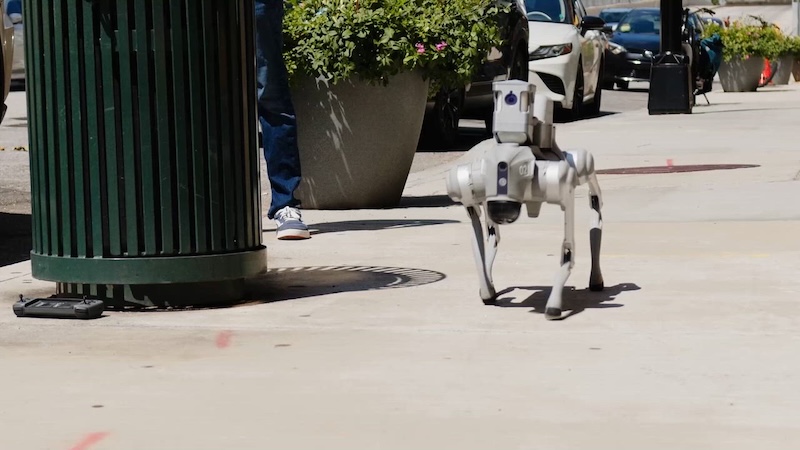
Robot dogs are assisting police in Atlanta by tracking down car break-in suspects, showcasing their growing role in law enforcement. This incident highlights the practical application of robotics in enhancing public safety.
Meanwhile, a new robot theme park featuring humanoid K-pop dancers aims to woo audiences with a unique entertainment experience. The integration of AI in leisure is evolving rapidly.
Doomsday Glacier Set to Lose Its Ice Shelf
Antarctica's Thwaites Glacier is on the verge of losing its protective ice shelf, raising concerns about global sea level rise. If it collapses, it could lead to a 26-inch increase in sea levels, affecting millions worldwide.
Breakthrough in Protein Structure Prediction
An open-source AI model has generated an atlas of over one billion predicted protein structures, significantly surpassing previous databases. This could revolutionize biological research and drug discovery.
- Cells Trap Heat in Unexpected WaysNew research reveals how living cells cool down much slower than expected, which could influence medical treatments for conditions linked to body temperature. — Phys.org
- Elephant Happy Euthanized at Bronx ZooHappy, the elephant known for her self-recognition abilities, has been euthanized, marking a significant loss for animal behavior research. — Phys.org
- Astronomers Weigh Newborn Planets Using Dust RingsA novel method developed by astronomers allows for estimating the masses of newborn planets using the properties of surrounding dust rings. — Phys.org
- New Research on Human Geometry SkillsA recent study challenges the notion that geometric skills are exclusive to humans, linking them to navigation abilities found in various species. — SciTech Daily
- Move Over, AlphaFold: Open-Source Model Predicts Protein StructuresThe ESM Atlas has emerged as a major player in protein structure prediction, featuring over one billion entries. — Nature
이번 호가 도움이 되었나요?
클릭 한 번이면 다음 호에 반영됩니다.