 新興テック· · 4分
AI's Growing Footprint: From Corporate Layoffs to Autonomous Futures.
Today’s tech news paints a vivid picture of a world grappling with the implications of rapid advancements across fields like AI, robotics, and the exploration of our universe. As Jack Dorsey’s controversial layoffs at Block stir corporate discourse on compassion, the notion of a future with zero human employees is becoming alarmingly plausible. Meanwhile, the scientific community continues to unveil fascinating discoveries, from the mysteries of the cosmos to innovative robotics partnerships that aim to redefine human interaction. The convergence of these topics reflects a society at the crossroads of technological progress and ethical considerations, highlighting the urgent need for dialogue around our shared future.
AI's Growing Footprint: From Corporate Layoffs to Autonomous Futures

The recent news of Jack Dorsey’s drastic layoffs at Block, where he fired 4,000 employees while sporting a 'LOVE' hat, has ignited conversations about the human cost of AI-driven corporate strategy. Dorsey’s explanation—that AI necessitated these cuts—signals a paradigm shift where human roles are increasingly seen as expendable. Meanwhile, corporate adviser Daniel Miessler boldly claims that the ideal number of human employees is zero, suggesting that businesses are racing toward a future dominated by automation. While this may seem dystopian, it reflects a larger trend where efficiency and profitability overshadow the ethical implications of replacing human labor.
As companies embrace AI for operational efficiency, we're witnessing a clash between innovation and ethics. The question looms: what happens to the workforce? As organizations like Block pivot toward AI, workers are left pondering their place in a world that increasingly values algorithms over human intuition. It’s a stark reminder that as we dive deeper into the AI revolution, we must also address the human ramifications of these technological advancements.
Exploring the Cosmic Unknown: The Search for Alien Life
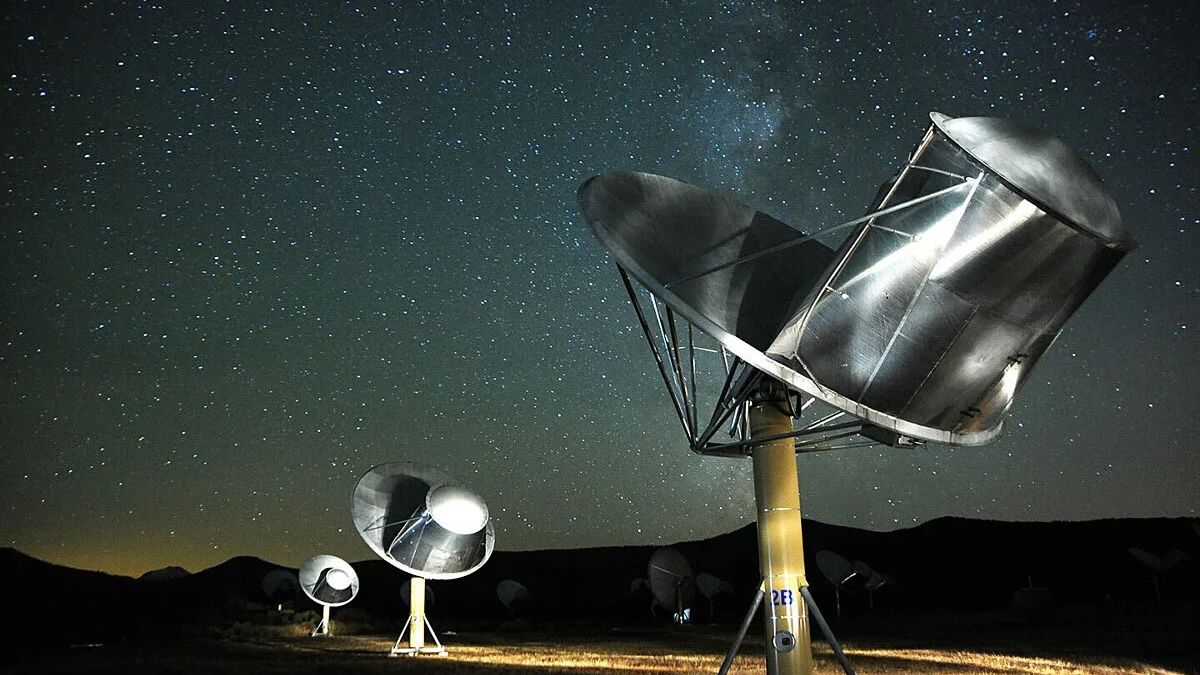
The search for extraterrestrial intelligence has long captivated humanity, but recent studies suggest that space weather might be scrambling the signals we hope to detect. Researchers propose that electromagnetic disturbances from stellar winds could interfere with the radio transmissions of potential alien civilizations, adding a new layer of complexity to the already challenging search. This discovery not only raises questions about our understanding of communication across the cosmos but also emphasizes the unpredictable elements that could affect our quest for life beyond Earth.
As we continue to explore the universe, the implications of such findings could reshape our approach to SETI and the technologies we develop to listen for alien signals. The intersection of astrophysics and environmental science illustrates the interconnectedness of our universe, reminding us that challenges in one domain often ripple through others. As we broaden our understanding, the quest for extraterrestrial life becomes not just a matter of technology but a multidisciplinary endeavor requiring innovative thinking.
Robotics: Collaboration Fuels Innovation

In the robotics realm, collaborations are paving the way for advancements in humanoid technologies. Companies like Honor and KDDI are venturing into the realm of service-oriented humanoid robots, focusing on real-world applications from retail to healthcare. Honor’s foray into robotics at the Mobile World Congress signals a shift from traditional consumer electronics to more interactive and adaptive machines. This pivot not only showcases the potential of robotics in enhancing human experiences but also illustrates how tech companies are diversifying their portfolios in a competitive landscape.
Moreover, partnerships like that of Schaeffler and Leju Robotics highlight the growing emphasis on integrating advanced robotics into industrial applications. As industries seek to maximize productivity and minimize human error, the role of humanoid robots is becoming ever more significant. The marriage of engineering prowess and AI capabilities is set to redefine the future of labor, suggesting a coming age where humans and machines work in tandem rather than in opposition.
PwC projects that the moon economy could generate significant revenue by 2050, highlighting the potential of lunar exploration.
出典Jack Dorsey's layoffs at Block resulted in a massive reduction of the workforce, indicating a significant shift towards AI-driven operations.
出典Deloitte's report reveals that 58% of companies are already utilizing physical AI solutions, with expectations for this to increase to 80% in the next two years.
出典Corporate Adviser Says the Ideal Number of Human Employees at a Company Is Zero
Daniel Miessler's provocative assertion that companies should aim for zero human employees echoes a growing sentiment among corporate leaders. As industries increasingly adopt AI technologies, the implications for employment are profound. This perspective challenges traditional labor roles and raises ethical questions about the future of work and the human experience in an automated world.
PwC predicts ‘moon economy’ will be worth around $127 billion by 2050
As NASA revises its lunar objectives, PwC's forecast of a $127 billion moon economy by 2050 presents both exciting opportunities and significant challenges. The emphasis on alternative energy infrastructure underscores the complexity of sustaining lunar activities and highlights the pressing need for strategic planning as we venture into this new frontier.
- Tiny, long-armed dinosaur leads to rethink of dinosaur miniaturizationA new fossil discovery challenges previous notions of dinosaur evolution and diet, suggesting a more complex evolutionary history. — Ars Technica
- Humans are being replaced by machines in the food supply chain — and it's leading to truckloads of wasteAutomation in food supply chains is causing significant inefficiencies, leading to waste and highlighting challenges in optimizing AI systems. — Live Science
- HEBI Robotics awarded $850,000 business contract by NASANASA's funding will support the development of modular actuation hardware for space, emphasizing the importance of robotic technology in extreme environments. — Robotics and Automation News
- Gravis Robotics expands into US with autonomous construction equipment platformGravis Robotics is launching its autonomous equipment platform in the US, showcasing advancements in construction technology. — Robotics and Automation News
- Popular Weight-Loss Drugs May Also Treat AddictionGLP-1 medications, known for weight loss, show promise in reducing substance use disorders among patients. — SciTech Daily
- How a protein pair ensures that faulty mRNA is destroyedNew research uncovers mechanisms behind mRNA decay, crucial for preventing faulty protein production. — Phys.org
- Inland China experienced typhoon-related population decline 3,000 years ago, according to 'oracle bones,' AI and physicsA study links historical population changes in China to intensified typhoon activities, supported by archaeological evidence and AI modeling. — Phys.org
この号は役に立ちましたか?
ワンクリックで次号の改善に役立ちます。