 AI· · 4分
Revolutionizing Document Parsing: FireRed-OCR-2B.
Today's tech headlines reveal an exciting intersection of artificial intelligence and practical applications, from document parsing to generative AI frameworks. As companies like Alibaba and AWS push the envelope with new models and methodologies, the focus on efficient, explainable, and safe AI solutions is more pronounced than ever. This evolving landscape highlights the industry's commitment to making AI accessible and effective, particularly in resource-constrained environments and specialized applications.
Revolutionizing Document Parsing: FireRed-OCR-2B
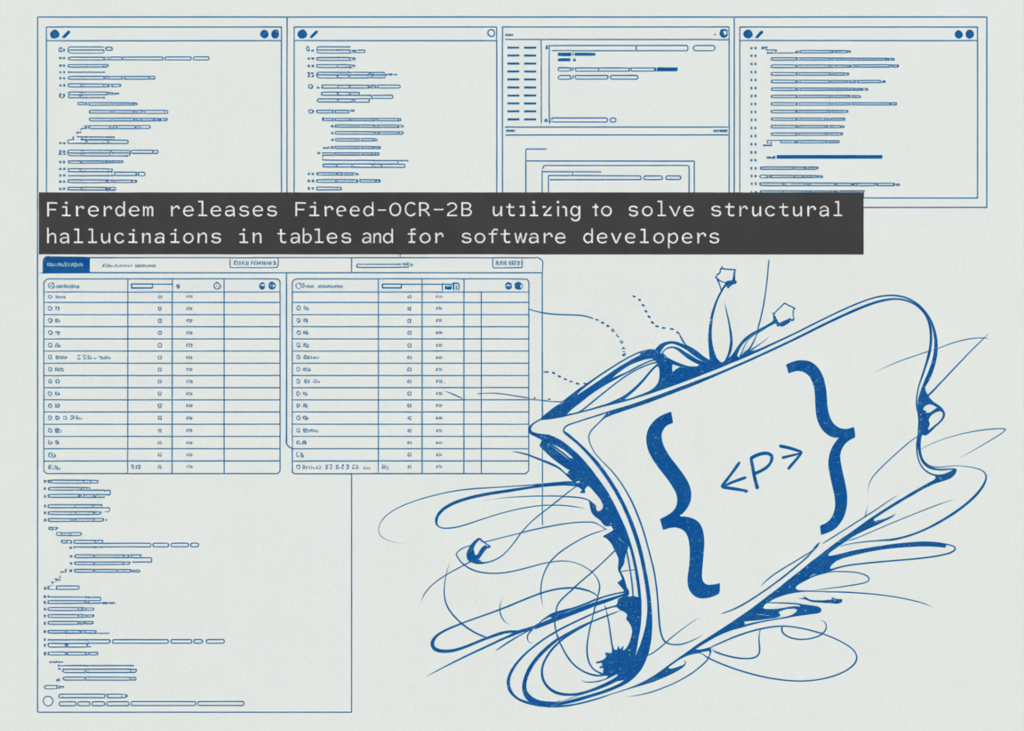
FireRedTeam's latest release, FireRed-OCR-2B, stands as a testament to the innovative approaches being developed to tackle the persistent issue of structural hallucinations in document processing. By treating document parsing as a structural engineering challenge rather than a mere text generation task, the team has achieved a remarkable 92.94% on the OmniDocBench v1.5 benchmark. This model’s architecture is designed specifically to maintain the hierarchical relationships in complex documents, which is crucial for software developers grappling with technical PDFs and LaTeX equations.
This shift in paradigm could significantly improve how AI handles document digitization, potentially saving developers countless hours in manual editing and corrections. With FireRed-OCR-2B, we may be witnessing the dawn of a new era in OCR technology that prioritizes accuracy over approximation, pushing the boundaries of what automated systems can achieve in interpreting complex layouts.
Data Engineering Meets AI: Preparing for the LLM Age
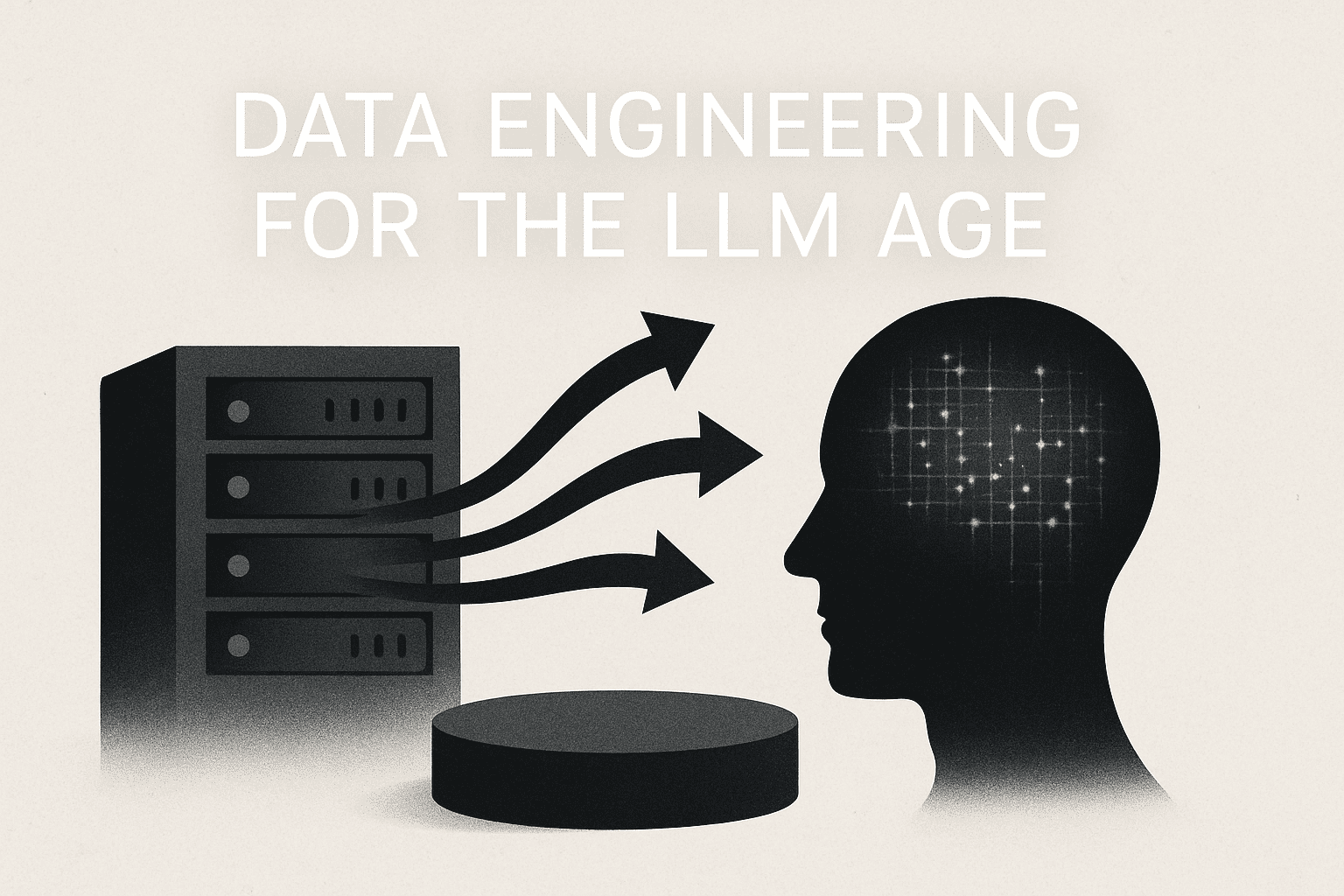
As large language models (LLMs) like GPT-4 and Claude gain traction, the importance of robust data engineering is becoming increasingly clear. Shittu Olumide discusses how the landscape is evolving from traditional business intelligence to AI-ready data systems. This transition highlights the need for improved data pipelines and architectures capable of supporting the immense data demands of modern AI applications.
The focus on data quality over quantity is paramount; poor data can severely limit the capabilities of even the most advanced models. New architectures like RAG are emerging, which optimize data flow and processing for LLMs, ensuring that data engineers are equipped to meet the challenges of this AI-driven era. This evolution not only changes how data is collected and processed but also shifts the skill sets required in the workforce, as professionals must now adapt to a landscape where data engineering plays a central role in AI success.
Generative AI: Striking a Balance with Safety
With the rapid development of generative AI applications, the challenge of balancing user safety with functionality has never been more pressing. AWS's introduction of Bedrock Guardrails provides developers with tools to navigate this complex terrain, allowing for the implementation of safety measures without compromising on the user experience. By configuring content filtering and monitoring, developers can ensure that their applications are not only effective but also responsible.
This focus on safety is particularly crucial as generative AI becomes more integrated into everyday applications, where the potential for harmful content or misuse is a legitimate concern. The ability to fine-tune these guardrails allows companies to deploy innovative solutions while maintaining ethical standards, ultimately fostering a more trustworthy AI landscape.
Compact and Efficient AI: The Rise of NullClaw and Qwen 3.5

In a world increasingly dominated by large AI models, innovations like NullClaw and Alibaba's Qwen 3.5 series demonstrate a shift towards efficiency and accessibility. NullClaw offers a lightweight AI agent framework that can operate on minimal resources, booting in just two milliseconds and using only 1 MB of RAM. This efficiency is particularly beneficial for edge computing solutions, where resource constraints are a constant concern.
Similarly, Qwen 3.5 emphasizes the development of small yet powerful models capable of running on consumer hardware. By focusing on 'More Intelligence, Less Compute,' these models reflect a growing recognition that practical deployment of AI should not come at the expense of performance. This trend towards compact, efficient models could democratize access to advanced AI capabilities, allowing a broader range of developers to leverage AI in their applications.
This score represents the accuracy achieved by FireRed-OCR-2B on the OmniDocBench v1.5 benchmark, highlighting its advanced capabilities in document parsing.
出典NullClaw, a new AI agent framework, boasts a remarkably small binary size, making it suitable for resource-constrained environments.
出典NullClaw operates on just 1 MB of RAM, showcasing its efficiency and suitability for edge computing applications.
出典FireRedTeam Releases FireRed-OCR-2B Utilizing GRPO to Solve Structural Hallucinations
FireRed-OCR-2B aims to revolutionize document parsing by treating it as a structural engineering challenge. This approach significantly reduces errors in interpreting complex documents, making it a vital tool for developers who rely on accurate data extraction from technical content.
Alibaba Releases Qwen 3.5 Small Models
Alibaba's Qwen 3.5 series introduces small models optimized for on-device applications, emphasizing efficiency without sacrificing intelligence. This release could reshape how AI is integrated into consumer devices, promoting wider accessibility.
- How to Build an Explainable AI Analysis Pipeline Using SHAP-IQA tutorial on creating an explainable AI pipeline using SHAP-IQ for understanding model predictions. — MarkTechPost
- Getting Started with Python Async ProgrammingA beginner's guide to mastering async programming in Python, focusing on handling I/O-bound tasks efficiently. — KDnuggets
- Building Specialized AI without Sacrificing IntelligenceAn exploration of how Nova Forge allows for the building of specialized AI models with domain-specific training. — AWS
- Code Less, Ship Faster: Building APIs with FastAPIAn overview of FastAPI, a modern framework for building APIs quickly with Python. — Towards Data Science
- February Sponsors-Only NewsletterInsights and updates from Simon Willison's latest monthly newsletter, focusing on various AI developments. — Simon Willison
- YOLOv3 Paper WalkthroughA breakdown of the improvements in the YOLOv3 algorithm compared to its predecessor. — Towards Data Science
- The Machine Learning Lessons I’ve Learned This MonthReflections on key lessons learned in the machine learning field over the past month. — Towards Data Science
この号は役に立ちましたか?
ワンクリックで次号の改善に役立ちます。