 IA· · 2 min
State Space Models: The New Contender.
Today, AI is buzzing with innovation — from transforming enterprise workflows to enhancing language models. Key themes include the rise of state space models, AI in finance, and the evolving landscape of coding practices. Let’s dive into the latest insights and tools shaping the future of tech.
State Space Models: The New Contender
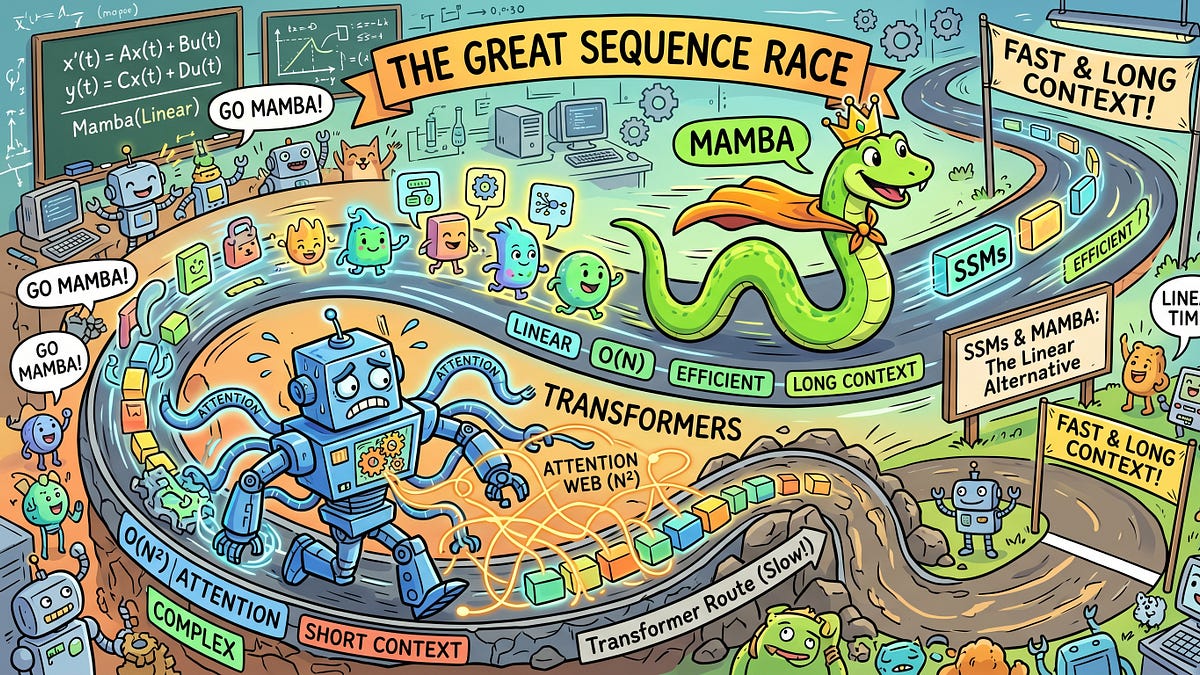
State space models (SSMs) are stepping into the spotlight, challenging transformers in natural language processing. With their linear time complexity and no need for key-value caches, SSMs could change the game for large context processing.
The research community has been abuzz, testing SSMs against the mighty transformer in areas like language modeling and reasoning. The results? Promising enough to suggest that we might be seeing a shift in the underlying architecture of AI applications soon.
AI-Powered Finance Revolution
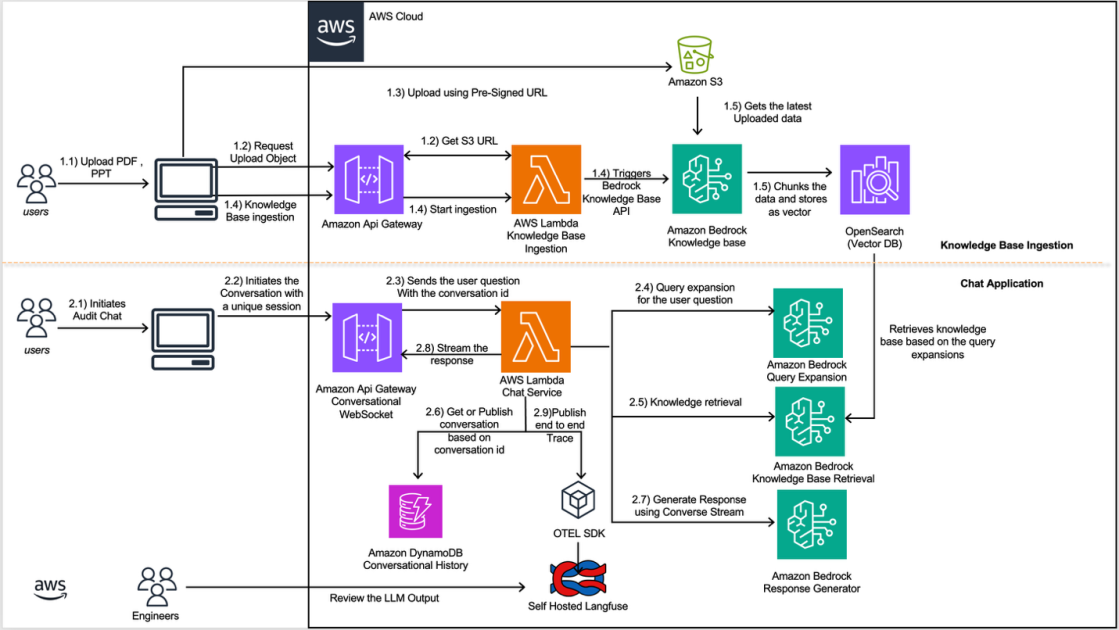
Amazon Finance is leveraging generative AI to streamline regulatory inquiries, making the process faster and more efficient. This involves synthesizing data across thousands of documents and automating responses, which is a game-changer for compliance.
Additionally, NVIDIA and SAP are integrating AI agents into enterprise systems, enhancing security and governance. This partnership aims to build trust in AI applications that can autonomously operate within complex business environments.
Coding in the Age of AI
The shift from vibe coding to spec-driven development is real. Professionals are now orchestrating coding agents to write software against detailed specifications, pushing for higher quality and oversight.
Tools like Codex are now staples in engineering workflows, helping teams to automate tasks and improve efficiency. Companies like AutoScout24 are already seeing major reductions in development cycles — from weeks to days — thanks to these innovations.
Guardrails for AI Reliability

As AI systems become more integrated into everyday applications, ensuring their reliability is crucial. New tools focus on monitoring language models to prevent issues like verbosity and hallucinations, which are common pitfalls in AI outputs.
This need for robust guardrails is underscored by the potential risks of deploying AI applications without proper oversight. Implementing readability checks and complexity budgets can significantly enhance user trust and system effectiveness.
How Amazon Finance Streamlines Regulatory Inquiries
Amazon is using generative AI on AWS to enhance its handling of regulatory inquiries, automating responses and synthesizing data from multiple sources. This scalable solution is crucial for meeting compliance demands in a fast-paced environment.
NVIDIA and SAP Bring Trust to Specialized Agents
NVIDIA and SAP are collaborating to integrate AI agents into enterprise systems, focusing on security and governance. This partnership aims to enhance the trustworthiness of AI applications in complex business environments.
- Proxy-Pointer Framework for Document IntelligenceThis framework aims to enhance document comparison for enterprises by addressing complex document structures and relationships. — Towards Data Science
- Using Polars Instead of Pandas: Performance Deep DivePolars outperforms Pandas in handling large datasets, providing significant speed advantages. — KDnuggets
- Automate Schema Generation for Intelligent Document ProcessingThis post discusses automating schema generation for document processing, streamlining information extraction. — AWS
- Guardrails for LLMs: Measuring AI ‘Hallucination’Learn how to implement guardrails for LLMs to measure verbosity and reduce hallucination risks. — KDnuggets
- Advancing AI for Materials with MatterSimMatterSim is enhancing materials research through faster simulations and multi-task modeling. — Microsoft Research
Questa edizione ti è stata utile?
Basta un clic: orienta la prossima.