 IA· · 2 min
Turbocharging Memory Usage.
Today’s AI news is buzzing with improvements in model architecture and retrieval systems. Major players like Anthropic and OpenAI are rolling out significant updates, reshaping how we interact with AI. This week is all about efficiency and innovation in machine learning.
Turbocharging Memory Usage

Google's TurboQuant tackles VRAM issues caused by KV cache in large language models. This fix cuts down on latency while managing memory overhead effectively. It's a crucial step for developers working with massive models, ensuring smoother inference processes.
The challenge remains: balancing the benefits of fast retrieval with the additional memory requirements. Google’s approach might just set a new standard in memory management for ML.
Claude’s New Phase
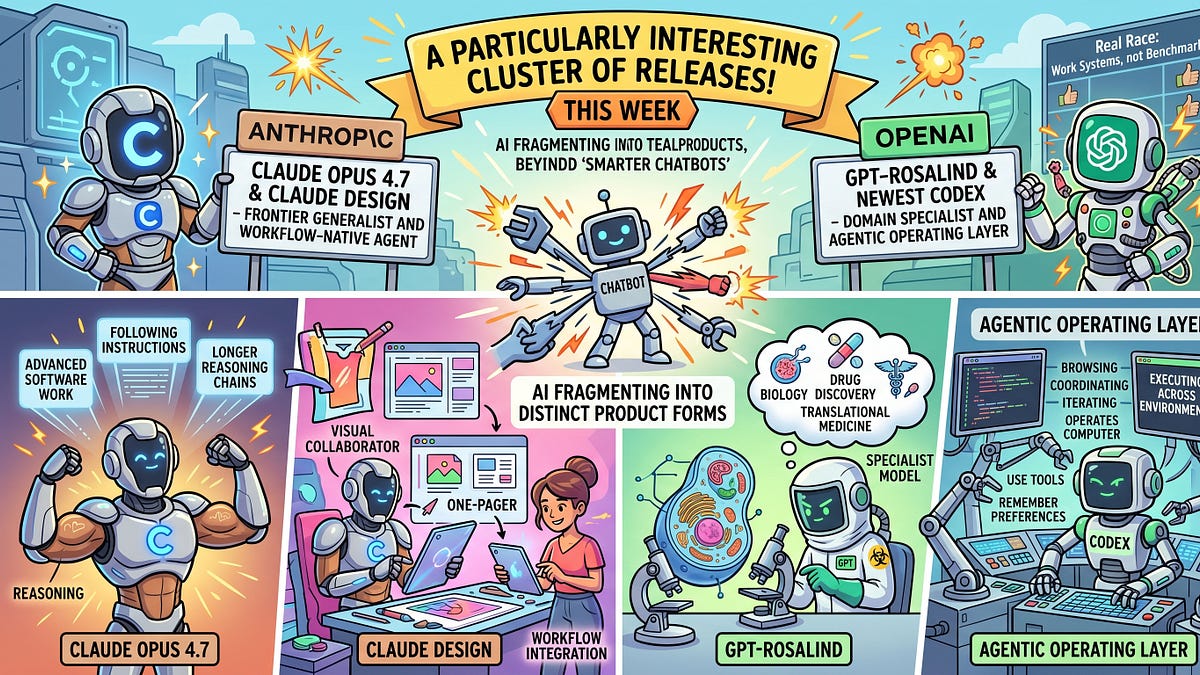
Anthropic and OpenAI are entering a new competitive stage. Anthropic's latest release, Claude Opus 4.7, improves on advanced software tasks and reasoning chains, hinting at a future where AI evolves beyond simple chatbots.
OpenAI is also diversifying with GPT-Rosalind and updated Codex, suggesting a shift toward specialized AI functions. The landscape is changing fast, and adaptability will be key for these giants.
Smarter Retrieval with Proxy-Pointer RAG

The introduction of Proxy-Pointer RAG brings structured document retrieval into the spotlight. By embedding document structure into vector indexes, it promises accuracy without the scalability trade-offs of older systems.
This approach targets enterprise-level documents that require precision, making it an exciting advancement for businesses leveraging data retrieval systems.
Navigating the Learning Curve

For newcomers, Python remains a vital skill in data science. The latest roadmap emphasizes efficient learning, addressing potential pitfalls many face.
As AI tools proliferate, understanding the fundamentals of programming could be your superpower, especially in coding interviews where AI assistance can’t be relied upon.
Exploring AI Agent Workflow

AI agents are evolving, and their workflows need to adapt. The concept of Git worktrees allows for multiple working directories, giving agents their own space to operate without interference.
This innovation could streamline development processes, making it easier for developers to manage concurrent tasks alongside AI agents.
The Sequence Radar #845: Last Week in AI: Anthropic and OpenAI Enter a New Phase
Anthropic's Claude Opus 4.7 and OpenAI's latest offerings signal a shift in AI's competitive landscape. The focus is moving from simple chatbots to specialized AI products.
Dreaming in Cubes
A pursuit to teach AI to generate 3D landscapes in Minecraft using VQ-VAE and Transformers. This blends creativity with cutting-edge AI techniques.
- Your RAG System Retrieves the Right Data — But Still Produces Wrong Answers. Here’s Why (and How to Fix It)A deep dive into the pitfalls of retrieval-augmented generation systems and how to address their hidden flaws. — Towards Data Science
- AI Agents Need Their Own Desk, and Git Worktrees Give Them OneExploring the benefits of Git worktrees for managing AI agents' workflows effectively. — Towards Data Science
- SQL functions in Google Sheets to fetch data from DatasetteLearn how to pull data from Datasette into Google Sheets with SQL functions. — Simon Willison's Weblog
- Changes in the system prompt between Claude Opus 4.6 and 4.7A detailed look at changes in Claude's system prompt and their implications. — Simon Willison's Weblog
- Claude system prompts as a git timelineTransforming Claude's system prompt history into a git timeline for easier tracking and comparison. — Simon Willison's Weblog
Questa edizione ti è stata utile?
Basta un clic: orienta la prossima.