 IA· · 2 min
Open Models: The Future of AI?.
Today, AI is buzzing with open models, intelligent agents, and a fresh push towards transparency. Open letters are shaping the future of AI development, while innovative applications are redefining workflows. It's a pivotal moment for AI as it intersects with ethics, efficiency, and collaboration.
Open Models: The Future of AI?
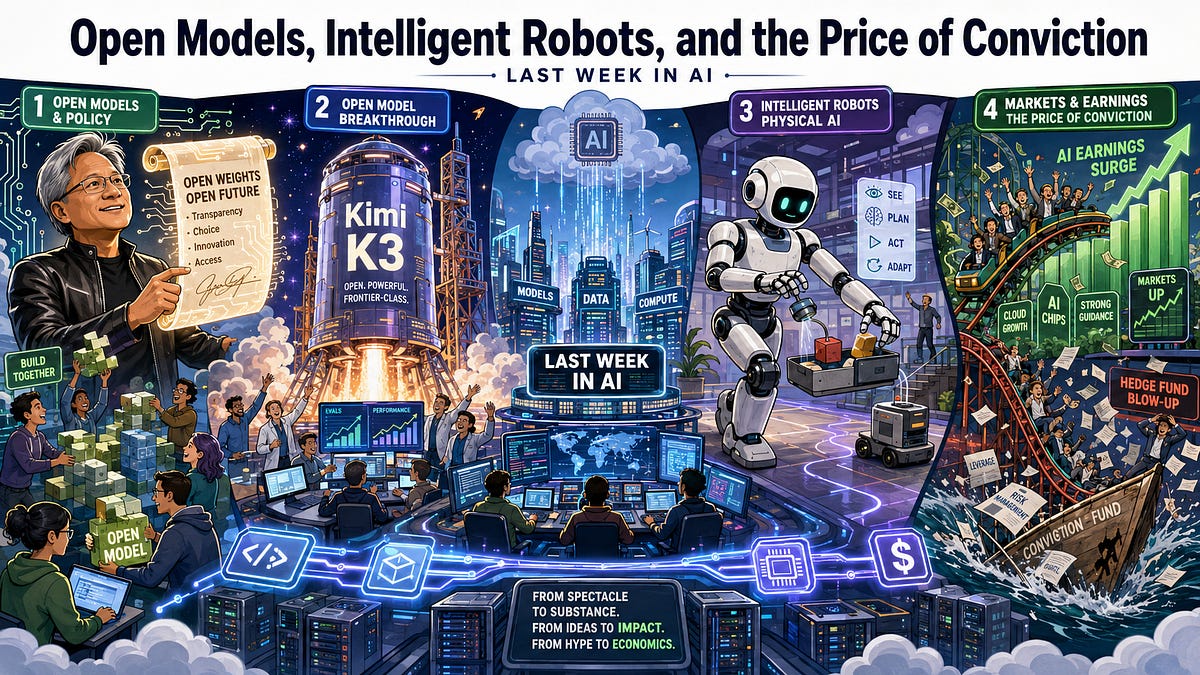
This week, an influential open letter signed by 235 companies, including NVIDIA and Amazon, advocates for open-weight models in AI. It argues that relying solely on closed systems poses risks and stifles competition. The conversation is shifting towards a need for transparency and community collaboration in AI development.
Jensen Huang's support emphasizes the industrial strategy behind open models. It's not just about research; it's about ensuring that the AI ecosystem is resilient and adaptable, enabling startups and universities to thrive.
AI Agents: Beyond Coding

Coding agents are proving their worth beyond mere coding tasks. They can manage diverse non-programming tasks like budgeting and online shopping, showcasing their versatility. This broadens the scope of what AI can accomplish in everyday workflows.
The potential applications are vast, pushing the boundaries of how we think about AI assistance. By leveraging coding agents in various tasks, businesses can streamline operations and enhance productivity.
Transforming Workflows with AI

Integrating AI agents into workflows is becoming a hot topic. Instead of choosing between rigid workflows and flexible agents, a hybrid model is emerging. This approach allows for structured operations while also letting AI adapt to real-time data and insights.
This flexibility is crucial for applications that require both control and adaptability. The hybrid model could be the key to unlocking more efficient and intelligent systems.
Open Letters: A Call for Transparency in AI
A recent open letter signed by major AI companies advocates for open-weight models, arguing they minimize risks and enhance competition. This is a crucial development in ensuring a balanced AI ecosystem.
Booking Simplified: An AI Agent in Action
An AI agent built with LangGraph replaces a lengthy booking process, showcasing the efficiency of AI in everyday tasks. This stateful AI can handle complex customer interactions seamlessly.
- Coding Agents Don't Need Bigger Context Windows — They Need a Context CompilerA new tool claims to optimize coding agents by reducing unnecessary context, enhancing performance. — Towards Data Science
- KDnuggets Weekly Roundup: Build and Deploy Your First Autonomous AgentThis roundup covers essential steps for developing autonomous agents and highlights 7 key ML algorithms. — KDnuggets
- How to Apply Coding Agents to Non-Programming TasksExplore the versatility of coding agents beyond programming applications. — Towards Data Science
- Put the Agent Inside the WorkflowDiscover the benefits of integrating AI agents into existing workflows for better flexibility. — Towards Data Science
- Release of condense-json 1.0A new library for condensing JSON data has been released, improving data storage efficiency. — Simon Willison
¿Te resultó útil esta edición?
Un clic basta: nos ayuda a mejorar la próxima.