 Emerging Tech· · 2 min
AI in Education: A Double-Edged Sword.
Today, the intersection of technology, climate, and innovation is shining bright. From AI advancements to climate-conscious solutions, the news highlights how our world is rapidly evolving. Buckle up for a dive into the latest trends shaping our future.
AI in Education: A Double-Edged Sword

Generative AI tools like ChatGPT are changing the educational landscape, but not always for the better. Instructors are finding themselves playing detective as students submit AI-generated work, leading to a frustrating teaching experience.
On the flip side, AI is shaping the workplace too. A Gallup poll reveals that while many workers experiment with AI, a significant number still resist using it, fearing job loss and ethical concerns. The AI revolution is here, but not everyone is ready to embrace it.
A Climate Awakening

Climate change is prompting action on multiple fronts. New research shows tiny particles from melting Arctic ice play a crucial role in cloud formation and climate dynamics. Understanding these particles could lead to better climate models.
In Greece, officials are evaluating ancient sites for climate threats. With tourism at stake, protecting these historical treasures is becoming more urgent as wildfires and rising waters threaten their existence.
Robotics on the Rise
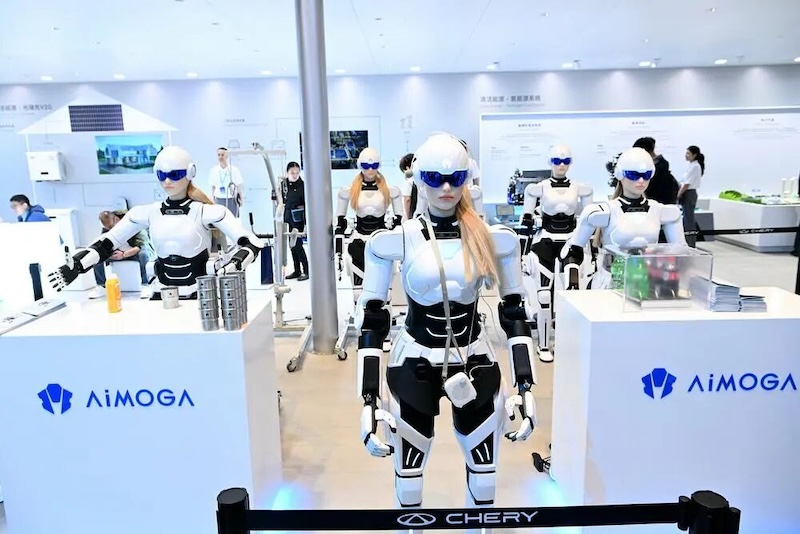
Humanoid robots are entering the consumer market, with Chinese automaker Chery selling its model for $42,000. This move signals a significant step toward the commercialization of AI systems that can perform tasks autonomously.
Meanwhile, Taiwan is launching a national robotics center with a hefty $629 million funding plan to stimulate local innovation. As nations ramp up their robotics capabilities, competition is heating up.
Health Innovations

Researchers are making strides in creating a universal vaccine targeting multiple respiratory pathogens. This could change how we handle seasonal illnesses and pandemics in the future.
Additionally, scientists are exploring how metformin, a diabetes drug, might replicate exercise benefits in cancer patients. This breakthrough could improve metabolic health when physical activity is limited.
Space and the Environment

NASA is gearing up for Artemis III after a successful moon flyby with Artemis II. The excitement builds as humanity inches closer to a sustainable presence on the lunar surface.
Meanwhile, a report warns that a severe solar storm could disrupt critical infrastructures like GPS and power grids. As our reliance on technology grows, so does our vulnerability to cosmic events.
Guaranteed income improved artists' finances, innovation
A guaranteed income program for artists showed significant improvements in financial stability and artistic output, suggesting cash support spurs creativity and innovation.
Deep learning turns weather satellite thermal imagery into hourly ocean current maps
Scientists developed a method using deep learning to create detailed ocean current maps from satellite imagery, enhancing ocean monitoring capabilities without new hardware.
Scientists unveil breakthrough tool that could help stop the world's third‑biggest driver of deforestation
A new method combines chemical fingerprinting and machine learning to identify soybean origins, offering a powerful tool against deforestation linked to agricultural expansion.
- Of gray whales that enter San Francisco Bay, nearly 18% die there, scientists findResearch reveals a troubling mortality rate among gray whales in San Francisco Bay, mainly from human activity. — Phys.org
- Greece's ancient sites get climate-change checkupGreek officials are assessing climate threats to historical sites, taking urgent measures to protect tourism revenue. — Phys.org
- US Air Force picks two bases for tiny nuclear reactors to boost power securityThe US Air Force is implementing nuclear microreactors to enhance energy security at select bases. — Interesting Engineering
- Taiwan launches national robotics center with $629 million startup funding planAiming to strengthen its robotics sector, Taiwan has initiated a significant funding program. — Robotics and Automation News
- NASA already has next Artemis flight in its sights following astronauts' triumphant moon flybyFollowing Artemis II's success, NASA is already planning for Artemis III, continuing its lunar exploration. — Phys.org
- Tiny particles in Arctic ponds may play role in cloud formation and climate changeResearchers discover that airborne particles from melting ice may significantly influence Arctic cloud formation. — Phys.org
- IMF chief warns global monetary system not ready for AI cyber threatsThe IMF managing director warns that the global financial system lacks protections against AI-driven cyber threats. — Tech Xplore
Was this issue useful?
One click is enough — it shapes the next one.