 AI· · 3 min
Google's TensorFlow 2.21: A Leap Forward for Edge AI.
Today's tech news is buzzing with significant advancements in artificial intelligence and machine learning, marking a pivotal moment in how these technologies are being deployed and utilized. From Google’s latest TensorFlow release that enhances mobile and edge performance, to deeper explorations of RAG systems and their contextual challenges, the narrative is clear: AI is evolving, but so are the skills needed to navigate its complexities. Meanwhile, the conversation around the AI bubble and the sustaining value of data science skills highlights a critical juncture for the industry, as businesses grapple with the tangible impact of their AI investments.
Google's TensorFlow 2.21: A Leap Forward for Edge AI
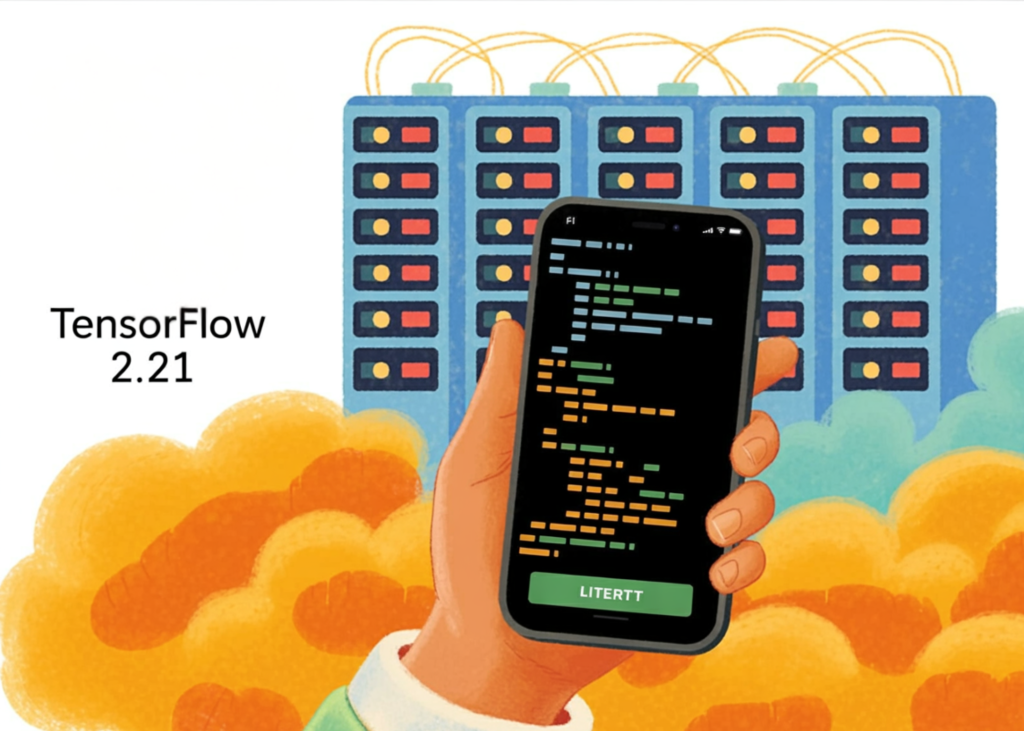
Google has unveiled TensorFlow 2.21, a significant update that transitions LiteRT from a preview to a robust production-ready framework. This upgrade is not just a cosmetic change; it fundamentally enhances the deployment of machine learning models on mobile and edge devices by introducing faster GPU performance and new NPU acceleration. Developers can now enjoy 1.4 times the GPU speed compared to its predecessor, TFLite, making it a vital tool for those looking to leverage AI in constrained environments like smartphones and IoT devices.
Moreover, with LiteRT's ability to handle lower-precision operations more effectively, developers can optimize their models for devices with limited resources. This move not only streamlines the deployment process but also broadens the hardware compatibility, paving the way for more versatile AI applications. As companies increasingly turn to edge computing, TensorFlow 2.21 positions itself as a key player in the race for faster, more efficient AI performance.
Context Matters: RAG and the Quest for Comprehensive Retrieval

The exploration of context in retrieval-augmented generation (RAG) systems highlights a critical challenge in AI-driven data processing. Traditional semantic search methods, while powerful, can falter in large knowledge bases where exact matches may be overlooked. The introduction of hybrid search, which combines semantic and keyword search techniques, is a promising solution that enhances the effectiveness of RAG systems. By integrating keyword searches alongside semantic capabilities, users can retrieve more comprehensive information, addressing the gaps often left by conventional methods.
However, the complexity of information distribution remains a hurdle. As documents are chunked for machine processing, vital context can be lost, particularly in intricate texts where meaning is interwoven across sections. This issue underscores the importance of developing AI systems that can maintain contextual integrity, ensuring that users receive not just data, but meaningful insights that reflect the interconnected nature of information.
Navigating the AI Bubble: Data Science's Resilience

As the AI bubble begins to show signs of stress, data scientists may find themselves in a unique position of opportunity. The disparity between heavy investments in AI infrastructure and the actual returns highlights a stark reality: while capital is flowing, measurable productivity impacts are still elusive. With many firms reporting dissatisfaction with generative AI outcomes, the demand for traditional data science skills is resurging. The article outlines an 'Anti-Hype Stack' of skills that remain relevant and resistant to automation, allowing data scientists to pivot effectively in this evolving landscape.
This shift presents a crucial moment for data professionals. As organizations recalibrate their expectations from AI, the emphasis on foundational skills—those that enable meaningful analysis and decision-making—will likely become increasingly valued. The ability to provide insights based on robust data analysis could distinguish successful practitioners from those swept away by the AI hype.
This figure represents the gap between hyperscaler spending on AI infrastructure and the actual revenue generated from enterprise AI, highlighting a significant disconnect in the market.
SourceA recent study found that 90% of firms reported no measurable productivity impact from AI, underscoring the challenges businesses face in deriving tangible value from their investments.
SourceTensorFlow 2.21 offers a 1.4 times increase in GPU performance, setting a new standard for on-device machine learning applications.
SourceGoogle Launches TensorFlow 2.21 And LiteRT: Faster GPU Performance, New NPU Acceleration, And Seamless PyTorch Edge Deployment Upgrades
Google's TensorFlow 2.21 introduces significant enhancements for deploying AI models on edge devices, emphasizing speed and efficiency. With LiteRT now fully production-ready, the framework promises 1.4x faster GPU performance and improved NPU integration, crucial for developers aiming to optimize machine learning applications for mobile and IoT. This strategic move not only prepares TensorFlow for broader adoption but also aligns with the growing demand for edge computing capabilities in AI.
The AI Bubble Has a Data Science Escape Hatch
As the hype around AI begins to wane, data scientists are finding that their traditional skills are becoming more valuable. With a staggering $300 billion gap between AI investment and actual enterprise revenue, data professionals equipped with foundational skills are well-positioned to thrive. The article outlines five essential skills for navigating this landscape, offering a roadmap for professionals looking to pivot away from the AI frenzy while maintaining relevance in the data science field.
- Understanding Context and Contextual Retrieval in RAGThis article explores the importance of context in retrieval-augmented generation systems and suggests hybrid search techniques to enhance retrieval effectiveness. — Towards Data Science
- Codex for Open SourceOpenAI launches a six-month free access program for maintainers of popular open source projects, aiming to bolster community-driven development. — Simon Willison's Weblog
Was this issue useful?
One click is enough — it shapes the next one.