 AI· · 3 min
Navigating the Latent Space: Google's Unified Latents.
Today, the AI landscape is punctuated by significant advancements and practical challenges, as evidenced by Google's introduction of a sophisticated machine learning framework, DeepMind's Unified Latents. Meanwhile, Anthropic's Claude Skills aim to streamline AI workflows, addressing the inefficiencies of prompt engineering. As organizations grapple with scaling ML inference on platforms like Databricks, OpenAI's recent agreement with the Department of War raises pressing questions about the ethical deployment of AI technologies in sensitive environments. The confluence of these developments not only showcases the rapid evolution of AI but also emphasizes the critical need for robust frameworks that navigate both the technical and ethical implications of this technology.
Navigating the Latent Space: Google's Unified Latents
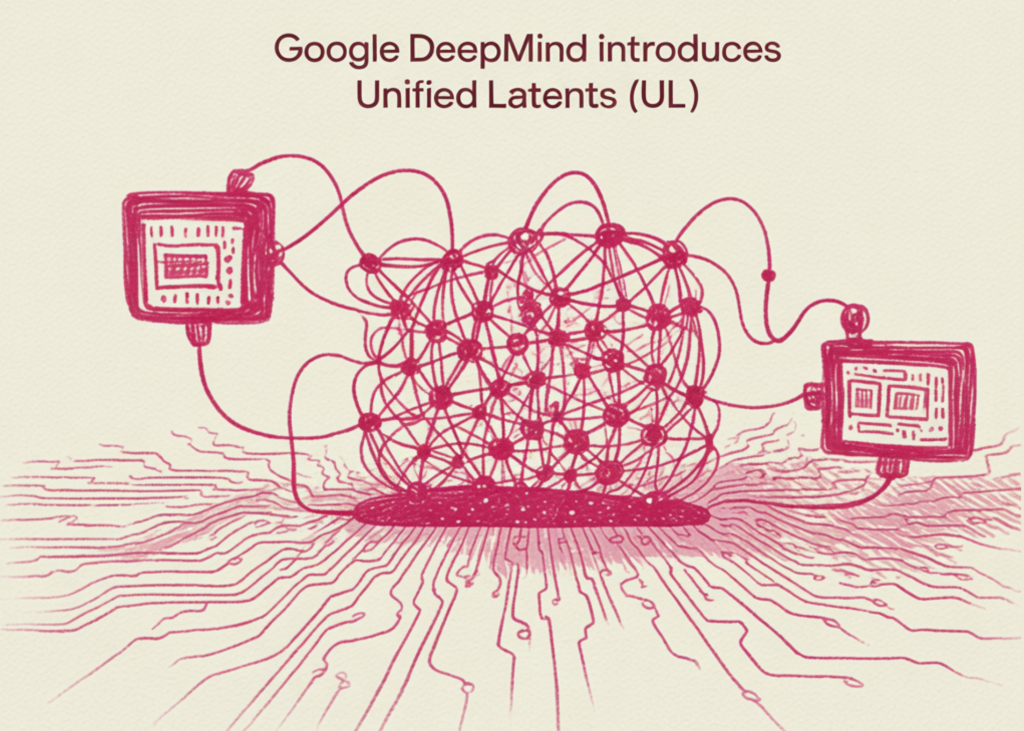
Google DeepMind's latest innovation, Unified Latents (UL), is a fascinating leap towards optimizing machine learning frameworks. By cleverly balancing the trade-off between information density and reconstruction quality, UL stands to enhance the way we handle high-resolution data synthesis. This new framework employs a method of joint regularization using a diffusion prior, ultimately allowing for more efficient computation without sacrificing the quality of the output.
As the field of AI increasingly leans on Latent Diffusion Models, UL could become a pivotal tool for researchers and developers aiming to produce high-quality generative outputs. The implications for industries relying on AI for complex tasks — from healthcare to creative endeavors — are profound, potentially democratizing access to advanced AI capabilities and reshaping how we approach model training and deployment.
Revolutionizing AI Workflows: Claude Skills and Subagents

In a world where prompt engineering often feels like a monotonous hamster wheel, Anthropic’s Claude Skills offer a breath of fresh air. These reusable instruction sets not only streamline the interaction with AI but also introduce a new paradigm for context management. By allowing AI agents to autonomously access relevant skills during conversations, Claude Skills could significantly reduce the cognitive load on developers and users alike.
This shift promises to redefine how we interact with AI, potentially leading to more intuitive and efficient systems. As organizations continue to adopt AI technologies, tools like Claude Skills could facilitate a smoother integration into workflows, paving the way for more sophisticated applications and enhanced user experiences. In essence, these developments may signal a move towards a more natural interaction model between humans and machines.
Scaling Challenges in ML Inference: Insights from Databricks

As organizations seek to scale their machine learning inference capabilities, Databricks presents a compelling case study on the complexities involved. The exploration of partitioning strategies and computational resources required for efficient data processing highlights the persistent struggles in optimizing ML workflows. With a 420-core cluster taking nearly 10 hours to process just 18 partitions, the need for efficient data management in ML pipelines has never been more apparent.
This scenario underscores a critical challenge that many organizations face: balancing computational resource allocation with the demand for rapid inference. As the industry moves towards more complex models, the strategies employed to manage data flow will be paramount in determining the success of AI applications. The insights gained from such experiences could serve as valuable lessons for others navigating similar scaling hurdles in their AI endeavors.
A 420-core cluster was used in an attempt to process ML inference, highlighting the scale of resources necessary for effective data handling.
SourceOpenAI's Strategic Agreement with the Department of War
OpenAI's recent agreement with the Department of War delineates crucial safety protocols and legal frameworks for deploying AI in sensitive environments. This pact introduces red lines for ethical conduct and establishes guidelines for responsible AI use in military applications. The implications of such a partnership could ripple across the tech landscape, influencing how AI companies approach government contracts and ethical considerations in AI deployment.
- Escape the Prompt Engineering Hamster Wheel with Claude SkillsAnthropic’s Claude Skills aim to transform the tedious process of prompt engineering into a more efficient workflow by introducing reusable instruction sets. — Towards Data Science
- Scaling ML Inference: Liquid or Partitioned?This article investigates the challenges of scaling machine learning inference on Databricks, focusing on the balance between partitioning data and maximizing resource efficiency. — Towards Data Science
- Interactive Explanations in AI CodingSimon Willison discusses the importance of interactive explanations in AI coding to mitigate cognitive debt and enhance understanding of complex systems. — Simon Willison's Weblog
- Google DeepMind's Unified Latents FrameworkDeepMind introduces Unified Latents, a framework designed to optimize latent representation in machine learning models, enhancing data synthesis efficiency. — MarkTechPost
Was this issue useful?
One click is enough — it shapes the next one.