 KI· · 2 Min.
Revolutionary Models and Architectures.
Today, AI and machine learning are pushing boundaries with innovative models and tools. From new frameworks for optimizing workflows to the latest advancements in agentic systems, the landscape is evolving rapidly. Keep an eye on how these developments will shape the future of tech and automation.
Revolutionary Models and Architectures
TII's Falcon Perception is turning heads in computer vision with its early-fusion Transformer model, promising better integration of language and vision right from the first layer. This marks a shift from traditional modular approaches, potentially simplifying complex tasks like grounding and segmentation.
Meanwhile, Google DeepMind's new research enables LLMs to rewrite their own game theory algorithms, outpacing expert-designed models. This could redefine how algorithms are developed for complex games, showcasing the evolving capabilities of AI.
Optimizing AI Workflows
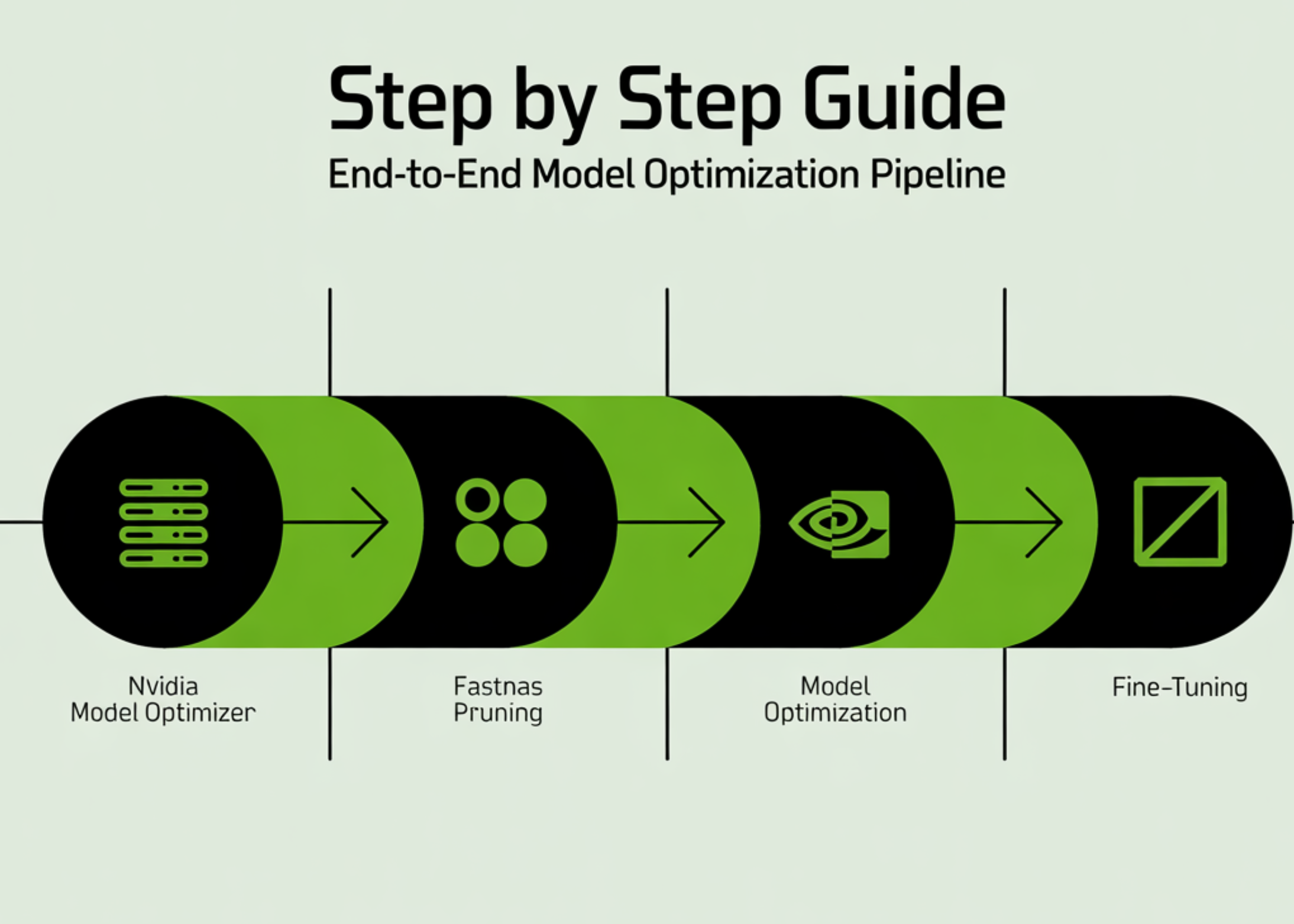
NVIDIA's Model Optimizer tutorial offers a step-by-step guide to streamline model training, pruning, and fine-tuning. This hands-on approach using FastNAS pruning can make AI development more efficient and accessible, especially for aspiring developers.
In a different vein, AWS is enhancing AI agent capabilities with tools for controlling domain access and simulating realistic user interactions. This focus on operational control and user experience is crucial as AI becomes more integrated into daily workflows.
Emerging Tools for Developers
For agentic developers, Docker containers are making it easier to build AI agents without complex setups. These ready-to-run environments allow for rapid prototyping, freeing developers from cloud service limitations.
Additionally, the rise of agent skill marketplaces is reshaping how AI capabilities are integrated. These platforms are streamlining the development process, allowing developers to reuse skills and focus on innovation rather than redundancy.
OpenAI acquires TBPN
OpenAI has acquired TBPN to boost global conversations on AI and support independent media. This move aims to enhance dialogue among creators and businesses in the tech community.
Gemma 4: Byte for byte, the most capable open models
Google DeepMind has unveiled Gemma 4, touted as the most capable open models for advanced reasoning and agentic workflows. These models are designed to deliver superior intelligence-per-parameter and are available under an Apache 2.0 license.
- I Replaced Vector DBs with Google’s Memory Agent Pattern for my notes in ObsidianExplore how a new memory agent pattern can enhance note-taking without the need for vector databases. — Towards Data Science
- How to Handle Classical Data in Quantum ModelsThis article discusses the intersection of quantum computing and classical data analysis, exploring quantum machine learning. — Towards Data Science
- The Most Common Statistical Traps in FAANG InterviewsLearn about key statistical traps that candidates face in interviews with top tech companies. — KDnuggets
- Scaling seismic foundation models on AWSTGS and AWS outline how they achieved near-linear scaling for seismic foundation models, significantly reducing training time. — AWS
- Simulate realistic users to evaluate multi-turn AI agents in Strands EvalsAWS introduces new evaluation methods for multi-turn AI agent interactions, focusing on realistic user simulations. — AWS
War diese Ausgabe hilfreich?
Ein Klick genügt – er prägt die nächste Ausgabe.