 KI· · 3 Min.
Revolutionizing AI Agents: Autonomy and Efficiency Take Center Stage.
In the ever-evolving landscape of artificial intelligence, today's news reflects a significant shift toward autonomy and efficiency, underscored by innovations in agent technology and model architectures. As companies like ByteDance and NVIDIA push the boundaries of what AI can achieve—whether through sophisticated agent frameworks or groundbreaking data strategies—the implications for industries are profound. The integration of AI into decision-making processes, from game development to fraud detection, highlights a growing trend where AI is not just a tool but an essential collaborator in various domains.
Revolutionizing AI Agents: Autonomy and Efficiency Take Center Stage
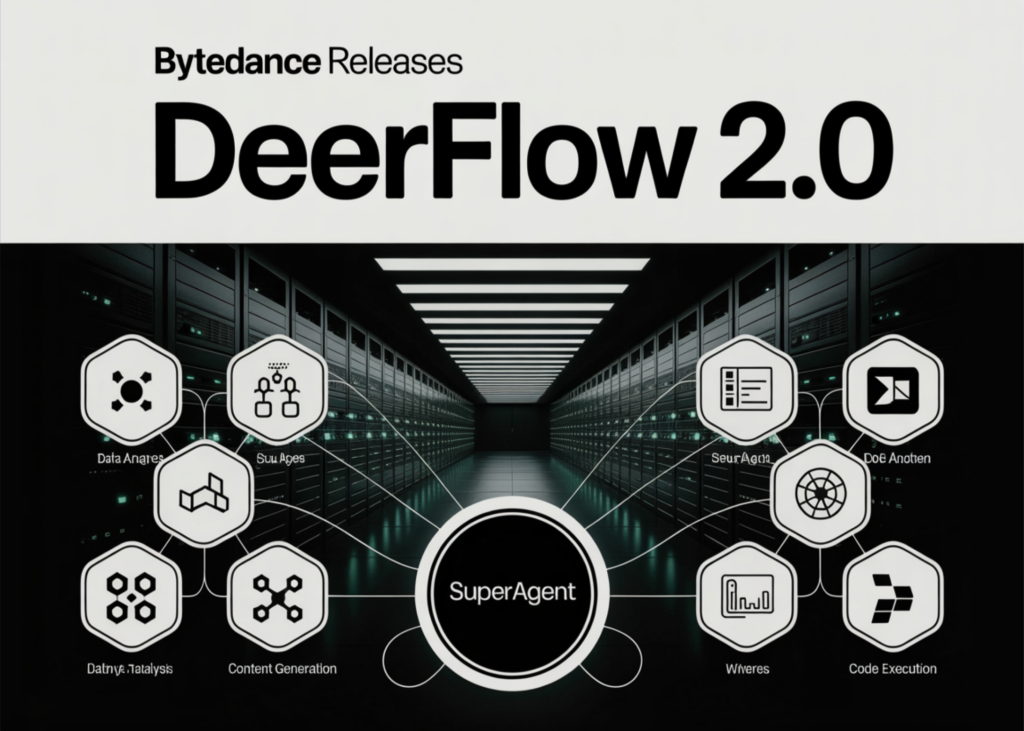
The release of DeerFlow 2.0 by ByteDance marks a pivotal moment in agent technology, allowing AI to not only suggest actions but execute them autonomously. This framework enables a new breed of AI capable of managing complex tasks within its own isolated environment, fundamentally changing the dynamic between human and machine. Gone are the days when AI merely offered advice; now, these agents can conduct research, code, and generate content without human intervention, setting a precedent for future developments in the field.
Similarly, NVIDIA's advancements in terminal agents reveal a dedicated effort to enhance AI's operational capabilities in technical environments. By addressing data scarcity and providing the necessary frameworks for building high-performance agents, NVIDIA is fostering an ecosystem where AI can efficiently execute commands and manage tasks, which is crucial for industries that require reliable, real-time performance. As these technologies develop, the implications stretch far beyond coding; they could redefine roles across engineering, product management, and design, where the emphasis shifts from creation to oversight and refinement.
Data and Memory: The Backbone of AI's Next Frontier
The recent announcements surrounding open data initiatives, particularly from NVIDIA, highlight the crucial role that data plays in the development of AI systems. Open datasets are no longer just supplementary resources; they are essential for training robust, effective models. The ability to access high-quality, transparent data can drastically reduce the time and cost associated with AI development, facilitating faster iterations and ultimately leading to more reliable AI behaviors.
Moreover, the exploration of memory systems for AI agents, as discussed in Microsoft's latest research, emphasizes the need for AI to not only retain information but to leverage it effectively. This shift from raw interaction to structured, reusable knowledge is critical for enhancing the decision-making capabilities of AI systems. As these memory frameworks evolve, they will enable agents to perform tasks with greater context and understanding, further bridging the gap between human and machine intelligence.
The Intersection of AI and Game Development

At the forefront of this week's developments is NVIDIA's introduction of the RTX PRO Server, which promises to revolutionize game development through virtualized workflows. By centralizing GPU resources, NVIDIA is not only improving efficiency but also allowing teams to collaborate more effectively across diverse locations. This innovation is crucial as game development becomes increasingly complex, requiring seamless integration of artistic, engineering, and AI research tasks.
Additionally, NVIDIA's partnership with ComfyUI to streamline local AI video generation offers game developers tools to create cinematic experiences with unprecedented ease. The ability to generate high-quality video content locally, without relying on cloud resources, represents a significant leap toward democratizing game development. As these tools become more accessible, we can expect to see a surge in creativity and innovation within the gaming industry, driven by AI's newfound capabilities.
Gemini in Google Sheets has achieved a 70.48% success rate in manipulating complex spreadsheets, nearing human expert ability.
QuelleNVIDIA's partnership with Thinking Machines Lab aims to deploy at least one gigawatt of AI systems for training purposes.
QuelleA new Hybrid Neuro-Symbolic approach achieved a ROC-AUC of 0.970 ± 0.005 in fraud detection, outperforming standard neural networks.
QuelleByteDance's DeerFlow 2.0: The Future of Autonomous AI Agents
ByteDance's release of DeerFlow 2.0 signifies a major advancement in AI capabilities, allowing agents to autonomously execute tasks within isolated environments. This innovation not only streamlines workflows for developers but also represents a shift in how we perceive AI's role—from mere assistants to active participants in project execution. The implications for various industries are vast, potentially altering job roles and responsibilities as AI takes on more complex functions.
NVIDIA's Strategic Partnership with Thinking Machines Lab
NVIDIA and Thinking Machines Lab have announced a groundbreaking partnership aimed at deploying gigawatt-scale AI systems for frontier model training. This collaboration not only promises to advance AI technology but also aims to democratize access to cutting-edge models for enterprises and researchers, making significant strides towards the future of customizable AI.
- Keep the Tokens Flowing: Lessons from 16 Open-Source RL LibrariesA deep dive into the challenges and solutions in asynchronous reinforcement learning training across 16 libraries. — Hugging Face
- How to Build a Risk-Aware AI AgentA tutorial on constructing an AI agent that incorporates risk awareness and self-consistency for improved decision-making. — MarkTechPost
- The Sequence Knowledge #821: 4D and World ModelsExploring the evolution of world models in AI and the significance of DeepMind's D4RT. — The Sequence
- Introduction to Storage Buckets on the Hugging Face HubHugging Face introduces storage buckets for managing mutable ML artifacts efficiently. — Hugging Face
- Postgres vs MySQL vs SQLite: Comparing SQL Performance Across EnginesA benchmark of SQL performance across three popular database engines. — KDnuggets
War diese Ausgabe hilfreich?
Ein Klick genügt – er prägt die nächste Ausgabe.