 KI· · 3 Min.
The Rise of Agentic AI: A New Era of Intelligence.
Today's news is buzzing with groundbreaking advancements in AI technology, from new models that redefine efficiency to innovative tools that enhance user interactions. Leading the charge, Google has unveiled Gemini 3.1 Flash-Lite, a cost-effective powerhouse designed for high-scale applications, while Alibaba's OpenSandbox promises to simplify the development and execution of AI agents. As these tech giants push the boundaries, the focus on agentic AI systems continues to gain momentum, with real-world applications transforming industries and enhancing user experiences.
The Rise of Agentic AI: A New Era of Intelligence
Agentic AI systems are taking center stage as they evolve from mere chatbots into sophisticated entities capable of making decisions and taking actions autonomously. The transition from classic retrieval-augmented generation (RAG) models to agentic frameworks, as seen in the shift highlighted by experts, marks a significant leap in how we interact with AI. Instead of a one-off response, these systems can now engage in iterative reasoning, making them more adaptable and responsive to complex queries.
In this context, Lendi's innovative use of agentic AI to revamp the refinance journey showcases how these technologies can directly impact customer experience. By employing generative AI capabilities from Amazon Bedrock, Lendi has created a companion application that not only monitors loans but also offers personalized insights, illustrating the practical benefits of this approach in the financial sector.
Cost-Efficiency Meets High Performance with Gemini 3.1 Flash-Lite
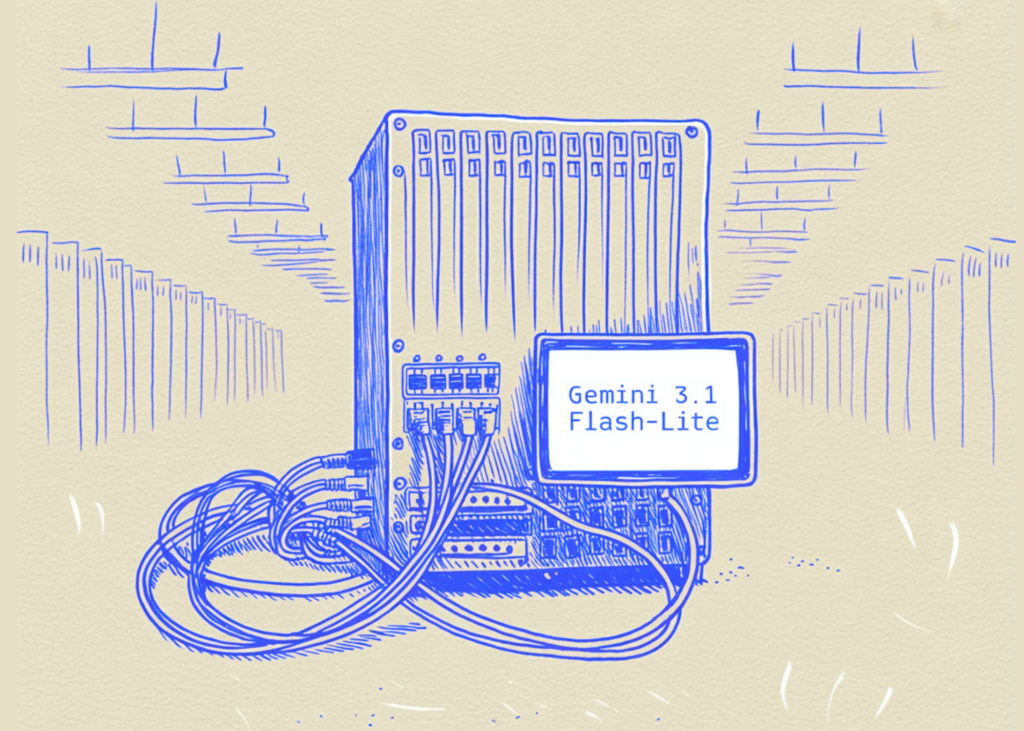
Google's latest model, Gemini 3.1 Flash-Lite, has made waves with its remarkable cost efficiency and adjustable thinking levels, making it suitable for a variety of high-volume tasks. At just $0.25 per million input tokens, it presents a compelling alternative for developers looking to scale AI applications without breaking the bank. This model introduces a new paradigm in AI reasoning by allowing users to optimize the depth of processing based on the complexity of their requests, thereby balancing speed and accuracy.
As organizations increasingly adopt AI for production-level workloads, Gemini 3.1 Flash-Lite's capabilities reflect a broader trend towards creating adaptable AI solutions that cater to specific operational needs. This model's introduction signifies not only a technological advancement but also a shift in how developers will approach AI implementation across various sectors.
OpenSandbox: Simplifying AI Development

Alibaba's OpenSandbox has emerged as a game-changer for developers working with AI agents, providing a unified and secure environment for code execution and model training. By eliminating the complexities of traditional development setups, OpenSandbox allows developers to focus on innovation rather than infrastructure. This tool not only enhances productivity but also fosters a safer environment for AI experimentation, paving the way for more robust applications.
The significance of OpenSandbox extends beyond its technical capabilities; it reflects a growing recognition of the need for standardized tools in the rapidly evolving AI landscape. As developers increasingly seek efficient ways to build and deploy AI solutions, tools like OpenSandbox are likely to become indispensable in ensuring both security and scalability.
The cost per million input tokens for Google’s Gemini 3.1 Flash-Lite model, making it highly accessible for developers.
QuelleThe time it took for Lendi to implement an agentic AI solution for streamlining the refinancing process.
QuelleThe increase in carbon emissions associated with returning items compared to the initial delivery, highlighting the environmental impact of online shopping returns.
QuelleGoogle Drops Gemini 3.1 Flash-Lite: A Cost-efficient Powerhouse with Adjustable Thinking Levels Designed for High-Scale Production AI
Gemini 3.1 Flash-Lite is Google's latest model optimized for high-volume tasks at an impressively low cost of $0.25 per million input tokens. This model introduces variable 'thinking levels' to adjust reasoning depth, allowing developers to optimize for speed and accuracy based on specific task requirements. The release reflects an industry trend towards cost-effective and adaptable AI solutions suitable for scaling applications across various sectors.
How Lendi revamped the refinance journey for its customers using agentic AI in 16 weeks using Amazon Bedrock
Lendi Group has transformed the home loan experience by employing agentic AI to create a companion application that monitors loans and provides personalized insights. The application, built using Amazon Bedrock, simplifies the complex refinancing process, showcasing how generative AI can enhance customer interactions in the financial sector. This development marks a significant step in leveraging AI for practical, user-centered applications.
- Alibaba Releases OpenSandbox for AI DevelopmentAlibaba unveils OpenSandbox, an open-source tool that provides a secure environment for the development and execution of AI agents. — Marktech Post
- GPT-5.3 Instant: Enhancing Everyday ConversationsOpenAI releases GPT-5.3 Instant, improving conversational flow and accuracy based on user feedback. — OpenAI
- Creating Interactive Worlds with Project GenieGoogle shares tips for creating engaging worlds in Project Genie, an interactive AI world-building tool. — Google Blog
- Graph Coloring You Can SeeA visual exploration of graph coloring and its applications across various fields. — Towards Data Science
- Why You Should Stop Writing Loops in PandasA guide on optimizing Pandas operations by avoiding loops for better performance. — Towards Data Science
- Building a Scalable Virtual Try-On Solution Using Amazon NovaAn introductory post on implementing virtual try-on technology to improve customer experiences in retail. — AWS Blog
- How Tines Enhances Security Analysis with Amazon Quick SuiteTines integrates with Amazon Quick Suite to automate security analysis and improve response times. — AWS Blog
War diese Ausgabe hilfreich?
Ein Klick genügt – er prägt die nächste Ausgabe.