 KI· · 3 Min.
OpenAI's Expanding Ecosystem.
In today's tech landscape, the intersection of artificial intelligence and practical applications is more vibrant than ever. From OpenAI's strategic partnerships to the innovative advancements in embedding models by Perplexity, the narrative of AI continues to evolve. With a focus on enhancing user experience and operational efficiency, these developments showcase a shift towards collaborative and robust frameworks that cater to diverse needs — be it in coding, data storytelling, or autonomous systems. As we dive into the latest trends, it’s clear that the future of AI will be defined not just by technological prowess, but by how we adapt it to enhance our daily lives.
OpenAI's Expanding Ecosystem

OpenAI is rapidly expanding its influence in the AI community with strategic partnerships and product enhancements. The recent collaboration with Amazon brings OpenAI's Frontier platform to AWS, promising to bolster AI infrastructure and custom model offerings. Concurrently, the introduction of a Stateful Runtime Environment for Agents in Amazon Bedrock is set to revolutionize multi-step AI workflows, providing developers with powerful orchestration and memory capabilities.
This partnership signals a move towards more integrated and scalable AI solutions, enabling businesses to harness the power of advanced AI tools without the heavy lifting of infrastructure setup. As OpenAI continues to innovate, businesses are likely to see an influx of enterprise-grade AI agents that can streamline operations and enhance decision-making processes.
Innovations in AI Models and Training Techniques
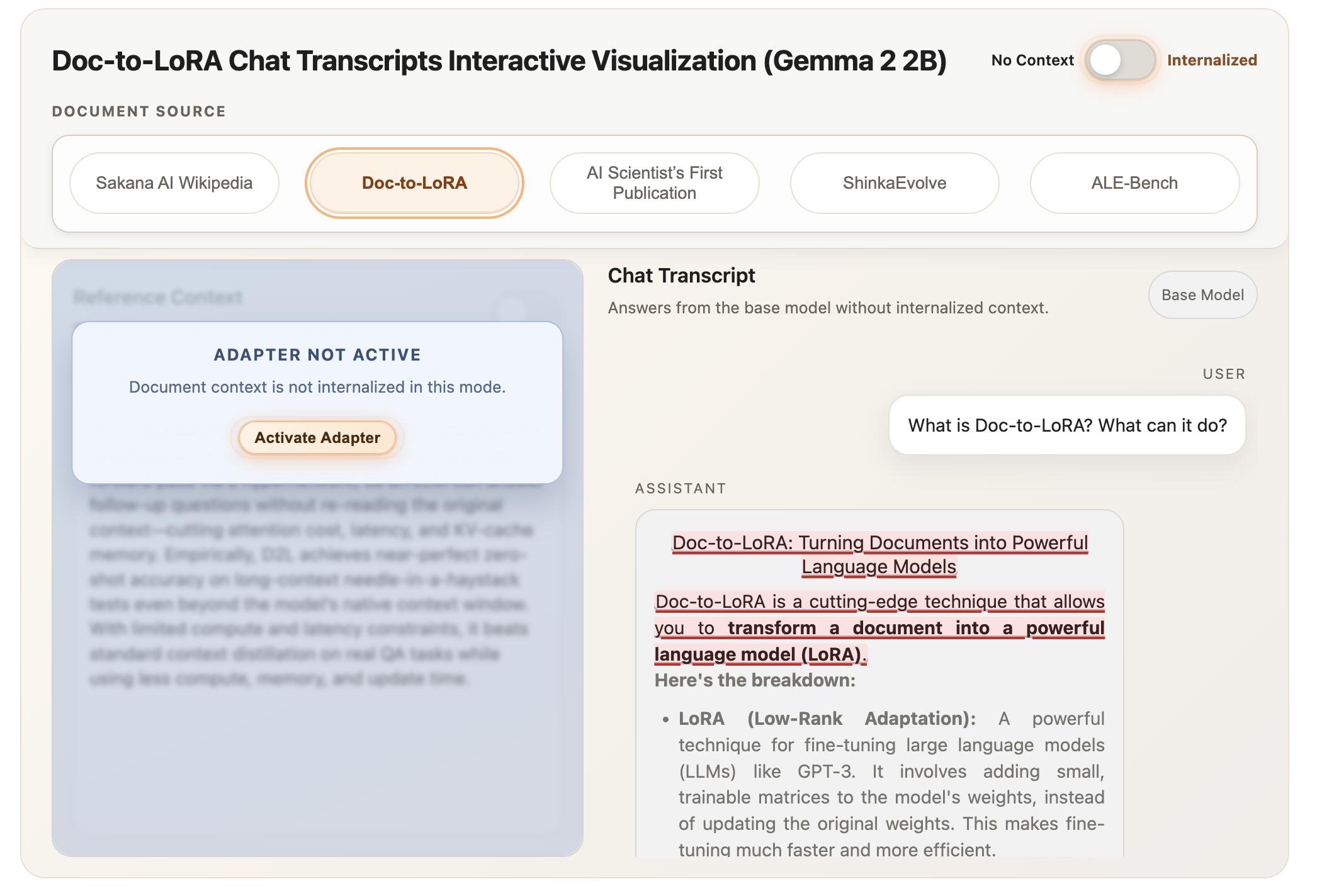
Recent advancements in AI modeling techniques are pushing the boundaries of what's possible. Perplexity's release of the pplx-embed models showcases the significance of bidirectional embedding for web-scale retrieval tasks, allowing for better context understanding and retrieval performance. Meanwhile, Sakana AI's introduction of Doc-to-LoRA and Text-to-LoRA hypernetworks addresses the challenge of adapting large language models efficiently, promising instant internalization of long contexts.
Moreover, the conversation around Reinforcement Learning from Human Feedback (RLHF) is evolving, as highlighted in a provocative opinion piece questioning its viability. The rise of verifiable rewards offers a tantalizing glimpse into a future where AI can autonomously reason and learn without human bottlenecks, potentially reshaping how we train AI models altogether.
The Future of Data Storytelling
As the demand for compelling narratives grows, the landscape of data storytelling is shifting dramatically. Traditional dashboards are being challenged by new formats that prioritize interactivity and immersive experiences. The latest trends show a clear movement towards creating more engaging data narratives, utilizing augmented reality, interactive elements, and advanced visualization techniques. This evolution is not just about aesthetics; it’s about enhancing comprehension and user engagement.
In conjunction with these developments, articles on coding tutorials and AI agent implementations are providing practical insights into how these storytelling techniques can be applied within frameworks like Python and various AI tools. This blend of creativity and technical expertise is setting the stage for the next generation of data-driven decision-making.
OpenAI's announcement of $110B in new investment indicates a massive influx of capital aimed at expanding its AI capabilities and infrastructure.
QuelleChatGPT has reached over 900 million users weekly, showcasing the widespread adoption and impact of AI in everyday life.
QuelleA recent A/B test on app store rankings showed a statistically significant 0.24% increase in relevance when using LLM-generated textual relevance labels.
QuelleThe Rise of Verifiable Rewards in AI Training
The recent shift towards verifiable rewards in AI training could signal the end of Reinforcement Learning from Human Feedback (RLHF) as we know it. This change aims to reduce human bottlenecks in training, allowing models to engage in deeper reasoning and autonomous learning. As AI continues to evolve, this approach may redefine how we think about model training and capabilities, potentially leading to more robust and independent AI systems.
Perplexity's New Embedding Models
Perplexity's latest release of the pplx-embed models marks a significant advancement in the ability to handle multilingual embedding tasks, optimized for web-scale data. By leveraging bidirectional attention and diffusion-based pretraining, these models promise to enhance the accuracy and reliability of retrieval tasks, thus addressing common challenges in understanding context and processing noisy data.
- Coding the Pong Game from Scratch in PythonA hands-on tutorial for coding the classic Pong game using Python's Object-Oriented Programming approach. — Towards Data Science
- Stop Asking if a Model Is InterpretableA thought-provoking analysis on the nature of interpretability in AI models and the importance of context in understanding model outputs. — Towards Data Science
- Docker AI for Agent Builders: Models, Tools, and Cloud OffloadAn exploration of how Docker is transforming the infrastructure for building autonomous AI applications. — KDnuggets
- How to Build Interactive Geospatial Dashboards Using FoliumA comprehensive guide to creating dynamic geospatial dashboards using the Folium library in Python. — MarkTechPost
- The Gap Between Junior and Senior Data Scientists Isn’t CodeAn insightful discussion on the factors that differentiate junior and senior data scientists beyond just coding skills. — Towards Data Science
- Free Claude Max for Open Source MaintainersAnthropic offers free access to Claude Max for open source maintainers, highlighting support for the developer community. — Simon Willison
- An AI Agent Coding Skeptic Tries AI Agent CodingA skeptic's journey into AI agent coding reveals the capabilities and frustrations of modern AI tools. — Simon Willison
War diese Ausgabe hilfreich?
Ein Klick genügt – er prägt die nächste Ausgabe.